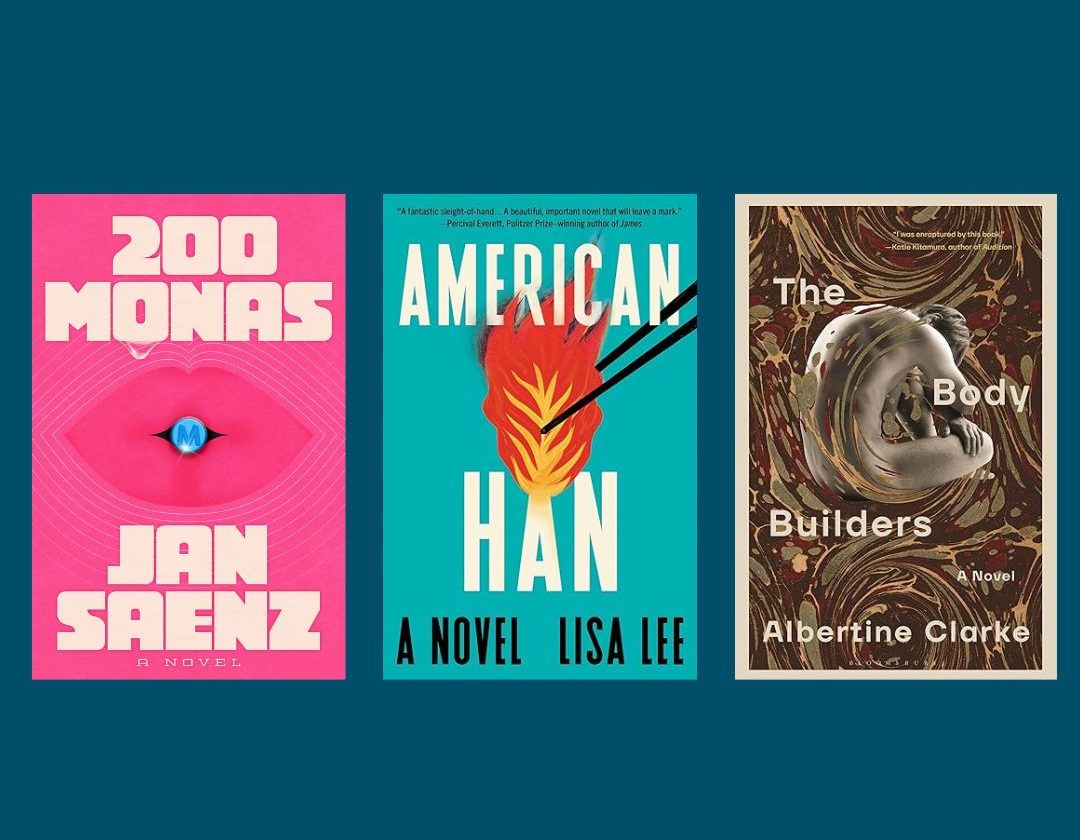
For the late winter (practically spring) edition of our debut craft series, I spoke with three authors who, each in their own way, wrote about refraction and distorted reflections of self in their first novels. The novels feature complicated introspective characters and compelling relationships ranging from a late mother and her twenty-two-year-old almost-graduate daughter in a college town; a missing brother and his wayward sister in San Francisco; and a young woman and a poolside stranger in London.
In Jan Saenz’s 200 Monas, an orgasm-inducing drug wreaks havoc on the life of twenty-two-year-old Arvy. After finding the pills in her late mother’s closet and being confronted by drug dealers with an ultimatum, Arvy embarks upon a quest to sell all 200 capsules in 24 hours. Throughout the cutting prose and action-packed novel, Arvy discovers and unravels things about her mother as much as herself through flashes of memory, grief, and intoxicating entanglements with deep unavoidable emotion.
In American Han by Lisa Lee, set in the early 2000s Bay Area, Jane feels lost and on the verge of dropping out of law school. When her mother appears at her door unannounced, the surprise visit triggers a series of events that induce nostalgia, re-evaluation, and yes, refraction. The novel soon winds through family history, Korean folklore, one life-altering incident, and Jane’s evolving perceptions of her parents and her brother, Kevin, as she reaches for empathy, understanding and, ultimately, finds herself in the attempt.
Finally, refraction becomes perhaps clearest in The Body Builders by Albertine Clarke. The novel begins when Ada meets Atticus at an indoor pool in London. They have a rare, startling encounter—the kind that feels both destined and happenstance simultaneously. She recognizes him, not because he is an older prominent novelist. Instead, Ada recognizes herself in him: “Looking into his face was just like looking in the mirror. It wasn’t that they looked the same.” And through a long profound email correspondence and a trip to Greece with her mother, Ada retreats deeper and deeper into the feeling that someone else is more her than she is.
Jan Saenz, Lisa Lee, and Albertine Clarke are our debut novelists of the 2026 winter craft interview series. The three of them corresponded with me on the seeds of their novels, the artistic universe each exists in, and the potent characters that carried their weight through the many rounds of revisions and fresh drafts.
Kyla D. Walker: Did you know right away that the book would be in present tense? How did this choice affect the novel’s propulsive energy and pace?

Jan Saenz: Oh yeah. I wanted a book that felt cinematic. Positioning Arvy’s voice in present tense created a more urgent, anxious, minute-to-win-it energy, like watching a movie in real time. Likewise, I find that present tense pairs well with transgressive work because of its jarring nature. Past tense can sometimes feel nostalgic, very fond of itself. Present tense doesn’t give a fuck about all that—it hurls the ball at you and says, “Catch.”
KW: Were you intentional about genre or playing with and subverting genre conventions? There is so much humor in the narration (as well as a dark academia background) and thriller aspects with the race against the clock. Were you reading a range of books for research?
JS: Intentional about genre? Not at all. Sometimes I wonder if writing 200 Monas was simply an exercise in making sense of my eclectic taste in books and films. I look at my bookshelf: Who is this weirdo who shelves new adult novels next to transgressive fiction, Elle Kennedy’s The Deal next to Dennis Cooper’s The Sluts? Why is the Dogma screenplay next to Eugene O’Neill, Clive Barker next to Sideways Stories from Wayside School? It sounds pretentious, like I’m so well-read, but I’m actually not—I just like whatever holds my attention, and I don’t think that’s weird. I favor absurdity because, let’s be honest, life is absurd. There is so much abnormality in our normality. I don’t even know what “normal” is; I don’t think I’ve ever felt it. Boring, sure, but normal? There’s no such thing. I didn’t even know 200 Monas was weird until people started calling it weird. I thought it was the most commercial thing I’d ever written.
KW: What was your thought process behind the unique names of the characters such as Arvy and Wolf?
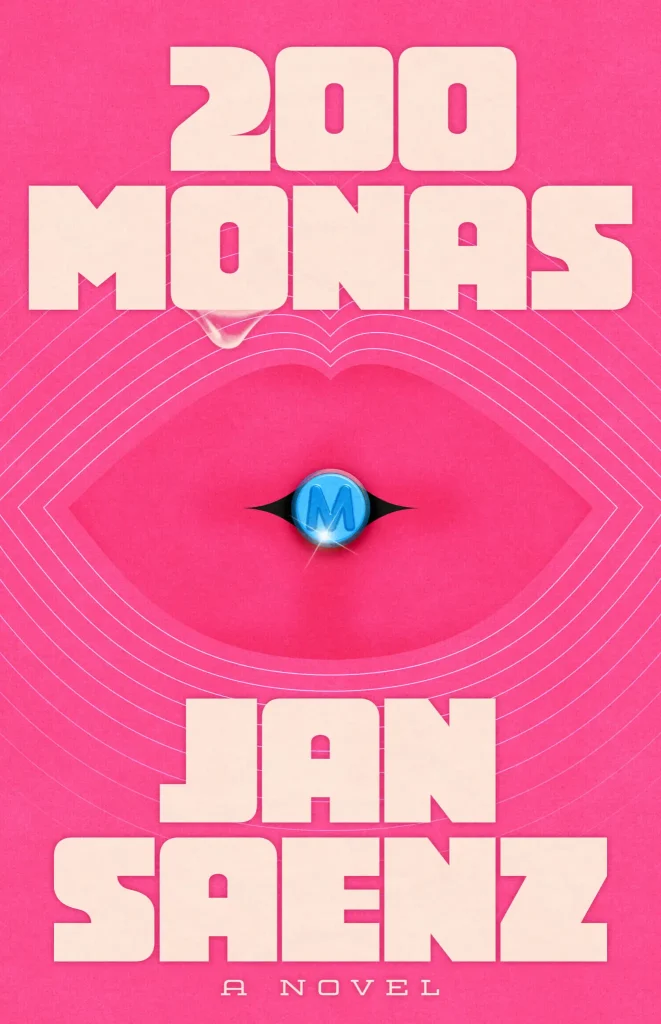
JS: The names came before the characters, like how a mother might name her baby in the womb before meeting the child. Names have a funny way of shaping us. I’m positive that being named “Jan” played a part in my sense of humor. It is not a serious name. I wanted something similar for Arvy—a name that felt at odds with the world, but also fun and inviting. You ever met someone who goes by their nickname? It’s charming and somewhat disarming; you instantly want to be their friend. Wolf’s name fits his character—the tousled hair, the lean, muscular build, the way he moves through campus. It’s fun to imagine Wolf’s name was inspired by Women Who Run With the Wolves by Clarissa Pinkola Estés, a feminist text, like maybe his feminist mother was reading it while pregnant.
KW: What was your favorite part of the writing process for 200 Monas? How long did it take from start to finish?
JS: 200 Monas took seven years to write. I’m thankful it took that long because time is one’s greatest revision tool—time brings wisdom, and if you’re lucky, that wisdom will find its way into the manuscript. For example, my favorite scenes to write were not the funny or over-the-top sex scenes, but rather the sweet scenes between Arvy and Wolf. To me, those were the scenes that made the book sexy. Time taught me that sexy isn’t really sexy, not on its own, not without irony. It must be sexy yet tender. Sexy yet flustered. Sexy yet weird. I don’t know if I would have come to that conclusion had I not spent so much time on the novel. In the end, it was irony that made the book sexy: Arvy and Wolf’s sweet, unlikely friendship against the backdrop of a hyper-sexual world.
Kyla D. Walker: When was the moment you felt ready to begin drafting American Han? And what was that initial spark—such as a specific sentence, scene, or possibly the end—that kicked off the writing?
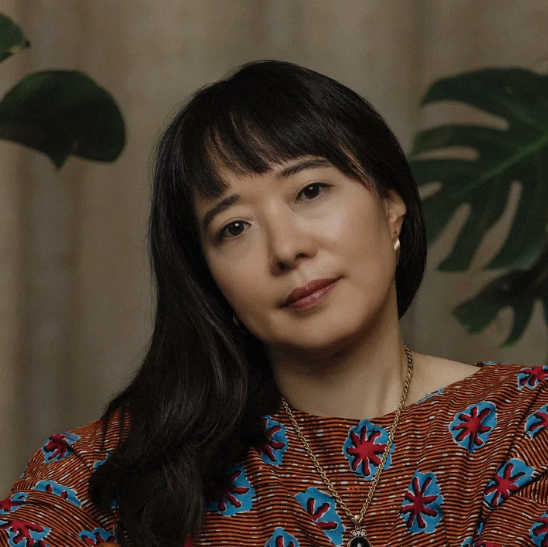
Lisa Lee: I was already writing my PhD dissertation titled Korean American Han when I started writing my novel. I knew I wanted to explore the feeling of han in my book, but I had no intention of naming or defining it. I just wanted to capture the feeling. A couple years earlier, I had presented a paper on han at a conference in Seoul, where I was angrily shouted down by several male Korean professors who insisted that han was a thing of the past, no longer culturally relevant. This may have been true in Korea, but it didn’t match my American experience. I realized that even if han had receded from the Korean psyche by the 90s, it had come to America with my parents’ generation and been passed down, taking a new form, combined with the trauma of immigration and American racism and the pressure to assimilate and forget about the past, and it remains very much alive here.
When I was writing the book, I was trying to understand the anger that had run through my family and myself our whole lives. At home, this anger was so constant it was invisible, but when I expressed it outside of my house I was often shamed for it. Because it was forbidden, I had to understand it.
KW: On that note of home, how did the setting of the Bay Area in the early 2000s help shape the story or the voices that flowed through it?
LL: I grew up in the Bay Area and my identity was formed in the early 2000s. It’s where and when I figured out who I was and who I wasn’t. It was a uniquely misogynistic time, characterized by a backlash to third-wave feminism. For women of color, all this misogyny was compounded by the racism we had faced since forever. It was also the beginning of what would become a lasting transformation of San Francisco because of the influx of tech money. At the beginning of the novel, Jane’s mother is looking for a house but finds that everything is just out of her reach. What she’s seeing is the beginning of a problem that would only get exponentially worse in the coming years. In looking at Jane’s life in that time period, I’m looking back at a world I lived in but can never go back to because it doesn’t exist anymore.
KW: Jane and Kevin’s mother, Mrs. Kim, is such a magnetic character. She plays a poignant role in the novel, perhaps partly because a natural comparison is established between mother and daughter. But she is explained to the reader through Jane’s perception, which is sharp, critical, insightful, and yet naturally limited. What were some of the things you did to capture Mrs. Kim’s voice, desires, and actions on the page in relation to Jane’s?
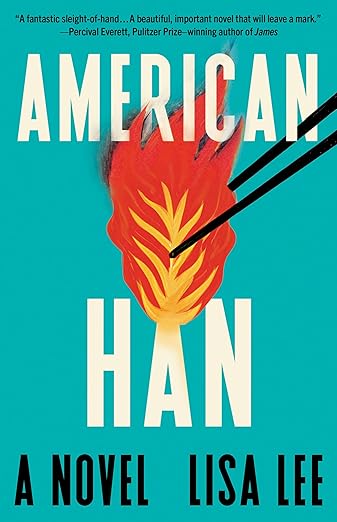
LL: Jane and her mother are presented as opposites. Jane has built her identity on being nothing like her mother, whom she sees as a narcissistic bully. But Jane begins to see the ways in which they’re similar, and how her mother is trapped by the patriarchy that she tries to force on Jane. While Jane is finding her way out, she feels guilty for leaving her mother behind.
When I created Jane’s mother, I tried to show how lost she was and how much hope and desire she had to get back the life she felt she’d missed out on, and I tried to get that on the page before Jane recognizes it and empathizes with her. Of course, I wanted the reader to understand where Jane was coming from and the damage her mother had done to her, but I also wanted her mother to be understood too.
KW: What did revision look like for American Han? And what was your favorite part of the overall writing process?
LL: I’ve lost count of how many times I revised this book. I don’t even know where to start counting. The first drafts of different stories I wrote while avoiding writing this one? Or the early seeds of what turned into American Han? Were those other stories the early seeds? At one point, I wrote a Harold & Kumar adventure starring Jane Kim and Margaret Cho’s mother. It was meant to be a comedy of errors, but it wasn’t funny. Early revision was about throwing out entire drafts and starting over. Eventually, I figured out that I had to write about what I didn’t want to write about—the sources of the anger in myself and my family—and that’s when the characters came to life.
My favorite part of the writing process is not the beginning when it’s new, and definitely not the end with all the rounds of editing. I like the middle, when I know the characters and I know where I’m going. At that point, I’m cutting a lot and filling in a lot, polishing scenes, adding detail to the characters and their motivations. It’s when I feel most confident and productive.
Kyla D. Walker: When was the moment you felt ready to begin drafting The Body Builders? And what was that initial spark—such as a specific sentence, scene, or possibly the end—that kicked off the writing?
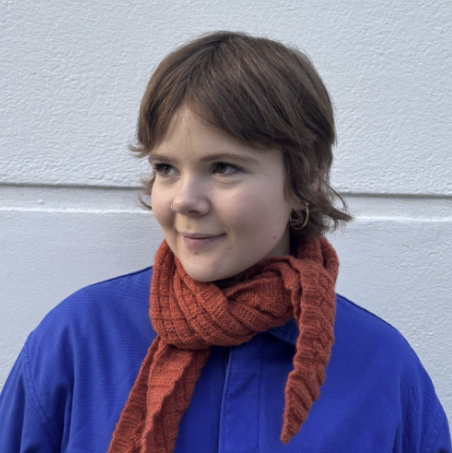
Albertine Clarke: I had been living in Florida for about six months (having moved from London for my MFA) when I began the novel. I think the distance from my home gave me space to analyze it—certain experiences I’d had in my early twenties were suddenly framed by the past. I was sitting at my kitchen table, so lonely and so homesick, bored, at a loss, totally alienated in a new environment. I spent a lot of time reminiscing, and out of this I started writing a little short story about a young girl who thinks she’s a middle-aged man, but the man she thinks she is, has also been grooming her. The image was so powerful, like a jolt of electricity. I’d struck on a metaphor which allowed me to talk about experiences I’d had in a way that allowed for the full complexity and confusion to come through. What began as a story about abuse transformed into something more open and more empathetic, but it definitely started with anger.
KW: Were you intentional about genre or subverting genre conventions? There is so much play between surrealism and the slipperiness of the self through the act of reflection (along with symbols of swimming pools and islands).
AC: The genre-melding is possibly the only part of the novel that was completely intentional. Philip K. Dick was my inspiration, specifically Valis, the novel he wrote about his experience with schizophrenia. What I like about that book is that he flips himself inside out, imagining a world where his delusions become truth. That’s exactly what I wanted to do with The Body Builders. What if the things I felt were materially real? What if by feeling them, I made them real? Speculative fiction felt like the only place I could explore those possibilities.
More than any books, my inspiration was psychotherapy. As the book developed, I became obsessed by the relationship between literature and the logic, or structure, of the unconscious mind. The genre I was working in became a way for me to follow a self-directed dreamlike formula, where Ada is, in a sense, living inside her own head. The world warps and bends to the way she feels about it. I like this because it allowed me to keep images completely intact, without reconstruction or explanation. My ultimate goal became to imprint my own unconscious, as directly as I could, onto the page, as if it was a dream.
KW: What was the significance of the names Ada and Atticus?
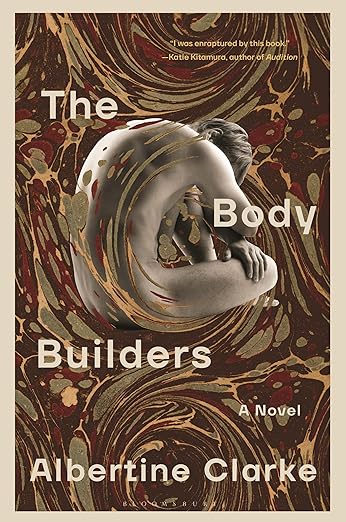
AC: Ada is palindromic, which is important to me because she is so elliptical. Her mother and father read her from opposite directions, getting opposite sides of the same coin. Atticus I liked because it’s Greek, which linked to the Greek section of the novel. I liked drawing these lines between Ada and Atticus, keeping them connected.
KW: Which novels or films do you feel The Body Builders is most in dialogue with?
AC: If Philip K. Dick is my literary father, then Natalia Ginzburg is my mother. Her novella The Dry Heart maps quite directly onto the first half of The Body Builders. She has a way of keeping her characters in utter confusion as to their own motivations, while showing those same motivations clearly to the audience. And, if they are my parents, Kurt Vonnegut is my grandfather. Slaughterhouse-Five does exactly what I wanted to do.
In terms of cinema, I mostly watch sci fi and action movies. Aesthetically films like Minority Report, Blade Runner, The Matrix, and 2001: A Space Odyssey have had a huge impact, especially when it comes to depictions of futuristic technology. Implants, androids, virtual realties all strike me as potent metaphors, all of which are present in The Body Builders. There’s a satisfying dialectical opportunity in the playing out of what-if scenarios—what if my body was fake? What if everybody else is fake? What would I do? What would I learn about myself? If I take away what I think is real, what is left underneath?
Read the original article here