An exclusive look at ‘Survivor 50’ with Jeff Probst and the castaways on set in Fiji. Plus, Probst pens an essay on how they’ve outlasted for 25 years.
“I feel like I’m a preacher sometimes, and people aren’t hearing my sermon.” This is what Jeff Probst tells me as our interview on set of Survivor 50 comes to a close in June 2025.
We’re sitting on a shaded patio at Survivor basecamp on Fiji’s Mana Island. The first two contests of the season, the marooning and immunity challenges, have already been filmed. The 24 castaways are at their camps as we speak. Somewhere out there, they’re deciding who will be the first boot. After a year of planning, Survivor 50 has begun. There’s an electric but quiet excitement on set now that the crew has shifted into game mode. As I sit down with Probst for our talk, his final interview of this trip, he carries this feeling casually. It’s been his companion for 25 years.
Survivor veterans will tell you that what you see onscreen is not the full picture. Perhaps surprisingly, Probst grieves what’s lost to the edit in his own way. He understands on a cellular level that Survivor, the show, can never do Survivor, the experience, justice. When he tells you to apply, he’s urging you to come see what he’s preaching.
“What I wish is that everybody who watches could come to location and witness it, run a challenge,” Probst shares. “Watch what it’s like to live on a beach. Spend one night in the jungle. If you touch this, actually get your hands dirty, you will never not want to be a part of it. It’s so addictive.”


Robert Voets / CBS
There was nothing quite like Survivor when it first premiered in 2000. Plenty of reality competition shows have tried to recreate its magic, but none have quite done so. Probst tries to explain why it’s a mainstay, even knowing those words can’t live up to its appeal when you’re on set: “The secret is that even if you don’t realize it, Survivor is this whisper in your ear saying, ‘I know you want a bigger adventure in your life,’” he says.
“I don’t think people really get the texture of Survivor, that it’s a real experience,” the Emmy-winning host adds. “If I could wave a magic wand, I would say everyone who watches gets to have this experience of what it’s like, and then go watch a season. You’ll never watch it again the same. You will watch for the rest of your life because now you know what it is. The only question is, ‘Why aren’t you out here doing it for real?’ That’s what I feel is missing.”
“I’m screaming at the top of my lungs, ‘It’s not about the game! It’s about the adventure!’” he continues. “The adventure that’s burning in your f***ing soul right now that you’re saying, ‘Is this it? Maybe, maybe not.’ The people who apply to be on Survivor are saying, ‘I got something. There’s something out there for me.’”
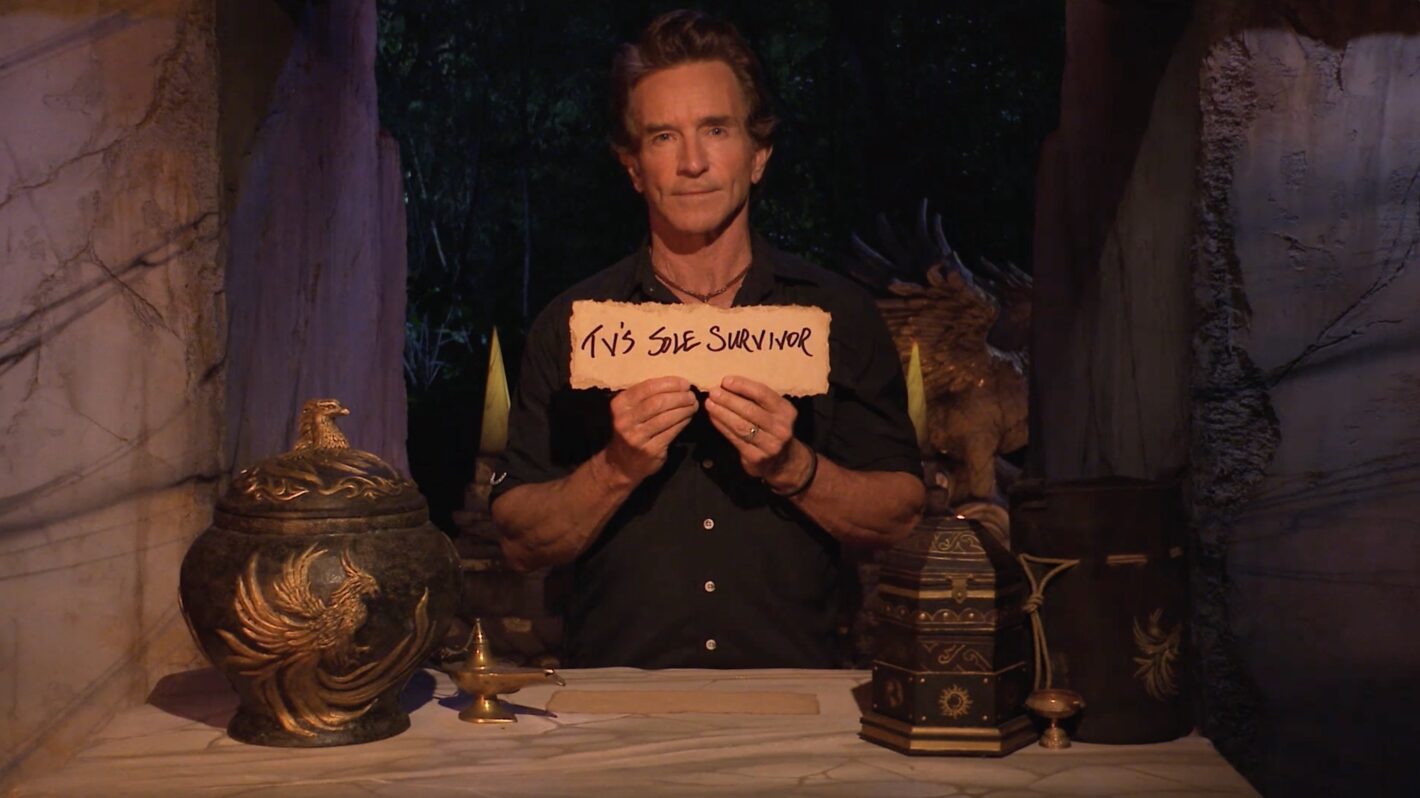
The “In the Hands of the Fans” theme is one of many attempts to bring viewers that sense of participation. Representing the show’s evergreen presence in the culture sphere is the phoenix, with the firebird motif strewn throughout the epic Tribal Council set design for the season. TV Insider has your exclusive first look at that set, along with the first photo of Probst with the entire Survivor 50 cast before they were split into their tribes, in the images above and below. At the top of the page, Probst gave us something fans have never seen before: the sight of him casting a vote, filmed the same night as the season’s first Tribal Council.
I sat down with all 24 contestants on a beach directly across from Monuriki Island (where Cast Away was filmed) as they looked ahead to their adventure. They reveal their hopes for the fan voting results in the video above (Probst hopes fans didn’t give them rice).
Plus, after filming wrapped, Probst penned an essay for us revealing his unforgettable Survivor moments. Here, find his reflections on 50 seasons of TV’s greatest social experiment.
My Favorite Survivor Moments
by Jeff Probst
Survivor is filled with big, unforgettable moments. The blindsides that shook the game, the dramatic challenges that pushed people past their limits, the brutal betrayals that changed relationships forever, and the Tribal Councils where everything turned on a single sentence. Those moments are beloved for a reason. They’re thrilling. They’re shocking. They’re a big part of why Survivor is still thriving 25 years after our premiere.
And when I think of my favorite moments, they are always connected to what they reveal about us: how we connect, how we judge, how we hope, how we break, how we rebuild, and how we behave when everything familiar is stripped away.
That is how I have come to see Survivor. Beneath the strategy and the spectacle, it is a place where human nature shows up in its rawest form. People surprise each other, and themselves, in ways they never expected. The moments that stay with me are the ones that show us something true about who we are.
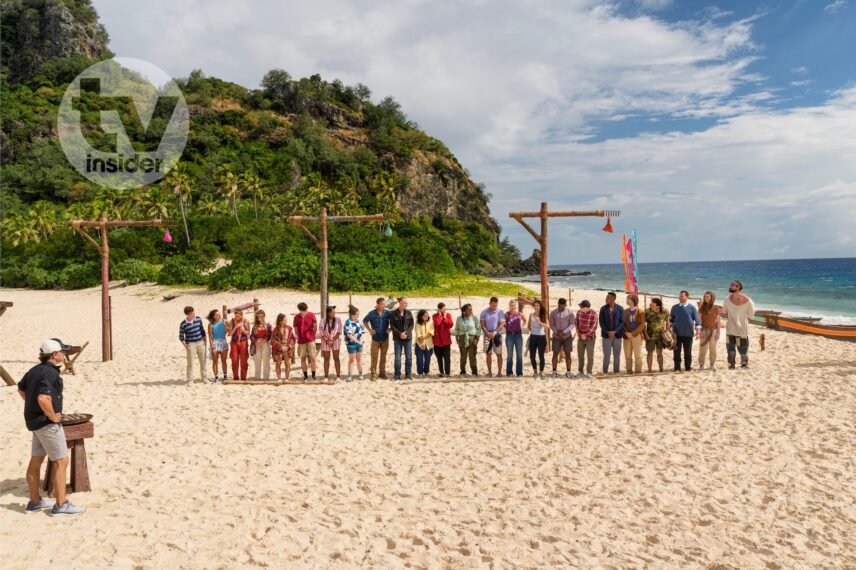
Jeff Probst and the Survivor 50 cast before the marooning challenge (Robert Voets / CBS)
1Our first season gave us an early glimpse. Most people remember Sue Hawk’s “snakes and rats” speech, and rightfully so. But the moment that still resonates most for me was the friendship between Richard Hatch and Rudy Boesch.
In the summer of 2000, a bond between an openly gay corporate trainer and a 72-year-old retired Navy SEAL was not something you saw on primetime television. They came from different worlds and different generations, but on that island, stripped of everything familiar, they connected. They trusted each other. They laughed together. It was the first hint that Survivor was not just a competition. It was a place where people could surprise each other in ways that reflected a deeper human possibility.
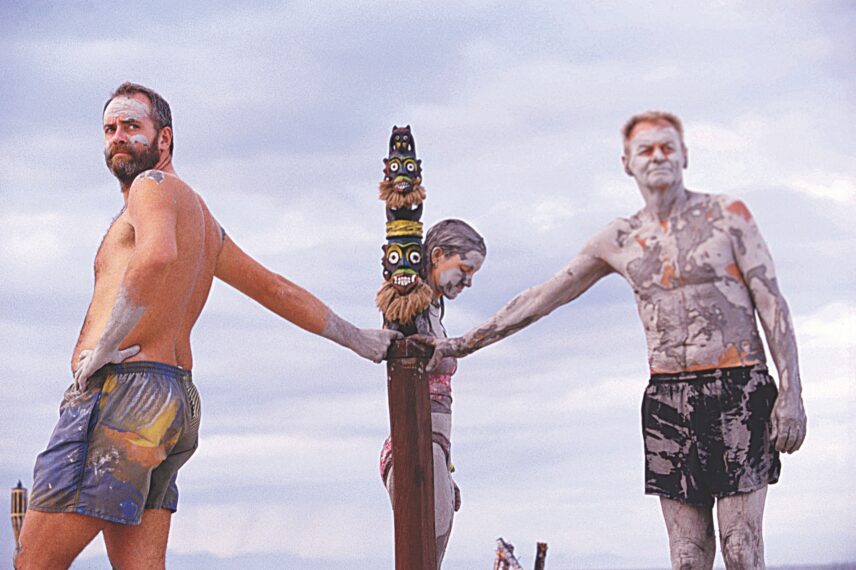
Richard Hatch, Rudy Boesch, and Kelly Wiglesworth in the final immunity challenge of Survivor Season 1 (Monty Brinton / CBS via Getty Images)
A few years later, in Pearl Islands, Survivor held up another mirror, this time to our instinct to label people before we understand them. Jonny Fairplay told the now-infamous “dead grandma” lie and instantly became the biggest villain on television. Fairplay already carried a rebellious, mischievous energy. He smirked. He loved chaos. So when he told the lie, it fit the story we’d already written for him.
2Meanwhile, in that same season, Rupert Boneham stole another tribe’s shoes on day one and became a hero. He literally committed theft, but with that booming voice and that giant heart, we embraced him. The same action from a different personality would have been judged very differently.
If Jonny had stolen the shoes, people would have said, “Classic villain move.” If Rupert had told the grandma lie, many viewers would have framed it as “a clever play,” because nobody expects that level of deception from someone we already trust. It wasn’t the actions alone. It was the story we assigned to them. Survivor didn’t create those labels. We did. The game simply revealed how quickly we attach morality to personality.
3By Palau, the show had become a canvas for even more human truth. Stephenie LaGrossa Kendrick‘s tribe was wiped out until she became a tribe of one. She refused to quit. She fought for every inch. And for a generation of young girls watching, Stephenie showed that strength doesn’t wait for permission. She just kept going.
In that same season, 40-year-old Tom Westman and Ian Rosenberger, 23, battled through the longest challenge in Survivor history, nearly 12 hours on buoys, until Tom found Ian’s emotional weak point. Ian didn’t quit because he was exhausted. He quit because he feared he had disappointed Tom. That moment wasn’t about endurance. It was about insecurity, respect, and the influence of experience over youth. Another human truth revealed inside a game moment.
4Then there is the mythology of Survivor — not the mythology we create as producers, but the mythology people create for themselves. Benjamin “Coach” Wade was the clearest example. He built his own legend right in front of us: the Dragon Slayer, the adventurer-poet, the man destined for epic quests. Fans loved him or loved to hate him, but they were always watching. He was performing a version of something we all do: casting ourselves as the hero of our own story.
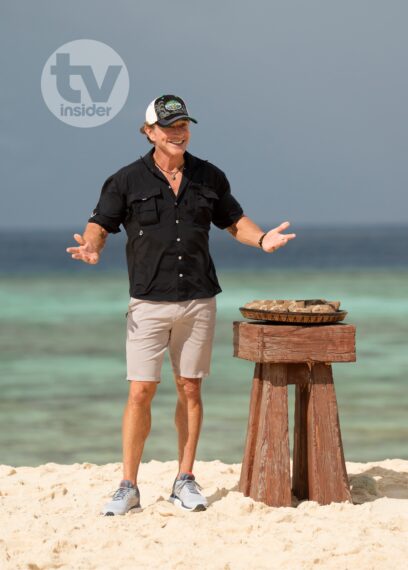
Jeff Probst at the Survivor 50 marooning challenge (Robert Voets / CBS)
Cirie Fields is a completely different kind of mythology. She never proclaimed anything. She simply said yes to an adventure she never imagined herself taking. The woman who “got up off the couch,” as she put it, became one of the most beloved players of all time. Coach mythologized himself. We mythologized Cirie. Two sides of the same human impulse.
Survivor has always evolved because people evolve it. Russell Hantz and Tony Vlachos are two of the clearest examples. Russell started finding idols without clues, not because the game demanded it, but because he demanded it. That was who he was: impatient, opportunistic, unwilling to wait for permission.
5Tony built spy shacks — elaborate hideouts to listen in on conversations — because that was who he was: chaotic, inventive, full of restless energy. Their innovations weren’t accidents. They were extensions of personality. Survivor evolves at the speed of human imagination.
The Yau-Man Chan and Dreamz Herd dilemma captures exactly what I mean when I say Survivor reveals us. Yau-Man was raised with truth as a core value. Your word is your anchor. So when he promised Dreamz the truck, he honored his word. For him, it wasn’t even a decision.
Dreamz grew up with uncertainty and scarcity. Survival wasn’t a metaphor. It was daily life. And survival teaches its own moral code: You adapt, you seize opportunity, you do what you must. So when he had to choose between keeping his promise and taking a life-changing shot in a game where lying is part of the design, he chose survival. Both men were living their truth. Survivor didn’t manufacture their conflict. It revealed it.
There are also moments that rise above strategy entirely. The cultural conversations that emerge because the format creates space for them. When Jeff Varner outed Zeke Smith, it became a global conversation about identity and dignity.
6When Joe Hunter helped Eva Erickson through a moment of sensory overload related to her autism, it became a global conversation about empathy. Across seasons, players have sparked discussions about race, gender, and belonging. Sometimes big, sometimes small, but always rooted in truth. When comfort is stripped away, these conversations don’t hide. They emerge.
7If I had to choose one moment that captures everything Survivor can be, it is the night the Black Widow Alliance convinced Erik Reichenbach to give up immunity. Erik wasn’t foolish. He simply got outplayed by a group of women who understood exactly how to tell him the story he needed to hear. At the center of that moment were Parvati Shallow, one of the greatest villains, and Cirie, one of the greatest heroes. A villain and a hero working together, their strengths combining into something that neither could have achieved alone.
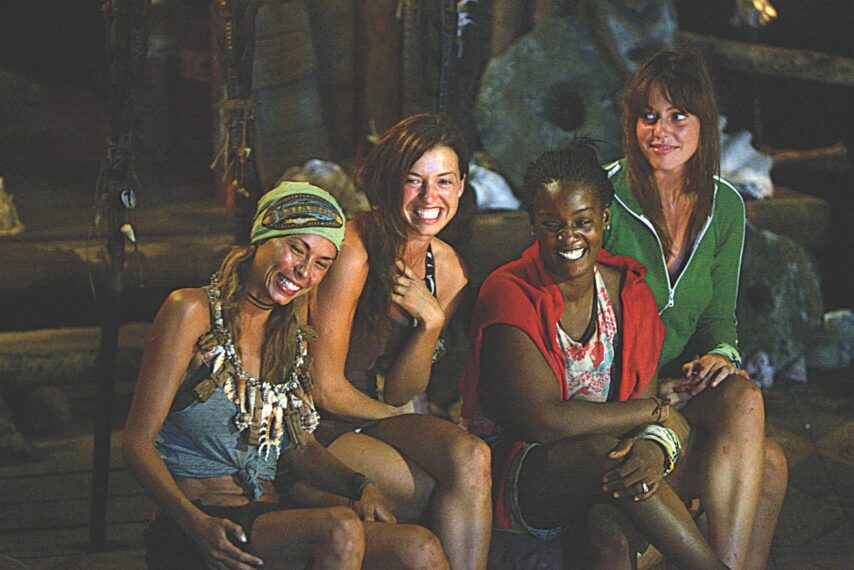
Natalie Bolton, Parvati Shallow, Cirie Fields, and Amanda Kimmel, during Tribal Council just after Erik Reichenbach got voted out in Survivor: Micronesia (Monty Brinton / CBS)
That moment contains everything the show has revealed over the years: trust, manipulation, instinct, vulnerability, confidence, and the audacity of human storytelling.
And that is the thread that connects all of this. Survivor reveals us. The big moments, the small moments, the funny moments, the uncomfortable ones. They are all glimpses of who we are when everything else is stripped away.
Fifty seasons in, that is still what moves me the most.
Survivor 50, Premieres Wednesday, February 25, 8/7c, CBS
Read the original article here