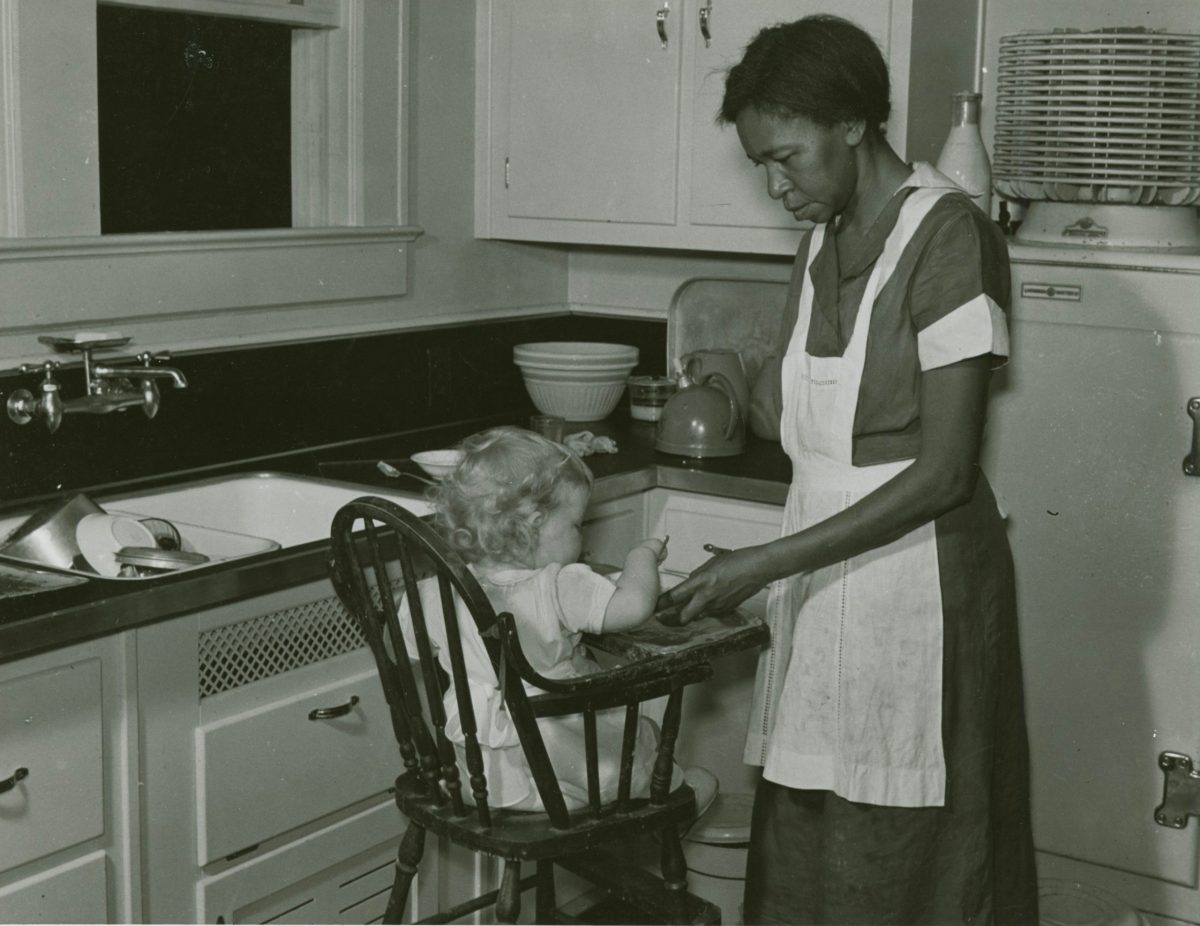
We are living in a moment when the presence of migrant workers is more visible than ever, yet their inner lives remain unevenly told. There are still not enough works of literary fiction centered on women as migrant workers—especially domestic workers. These stories do exist, but they are often older, or they appear only in fragments across texts—rather than being fully centered, these women tend to remain at the edges of someone else’s narrative. This absence is particularly striking to me because I grew up surrounded by such women. My mother. My aunties. The housekeepers and nannies in the homes of friends who had more than we did. It wasn’t something I had to learn about—it was simply the texture of everyday life. I watched how much these women carried, how much they gave, and how often that labor passed without anyone really stopping to see it for what it was.
I also remember how natural it all felt then. How unquestioned. The early mornings and the long days my mother kept. The way care was given so fully, and then quietly folded away. I didn’t think about it in any formal way, but I noticed things—how certain women held themselves, how they moved through other people’s homes, attentive to what was needed and careful not to take up too much space. Even then, there was a sense, difficult to name but impossible to ignore, that some lives were expected to unfold in the background.
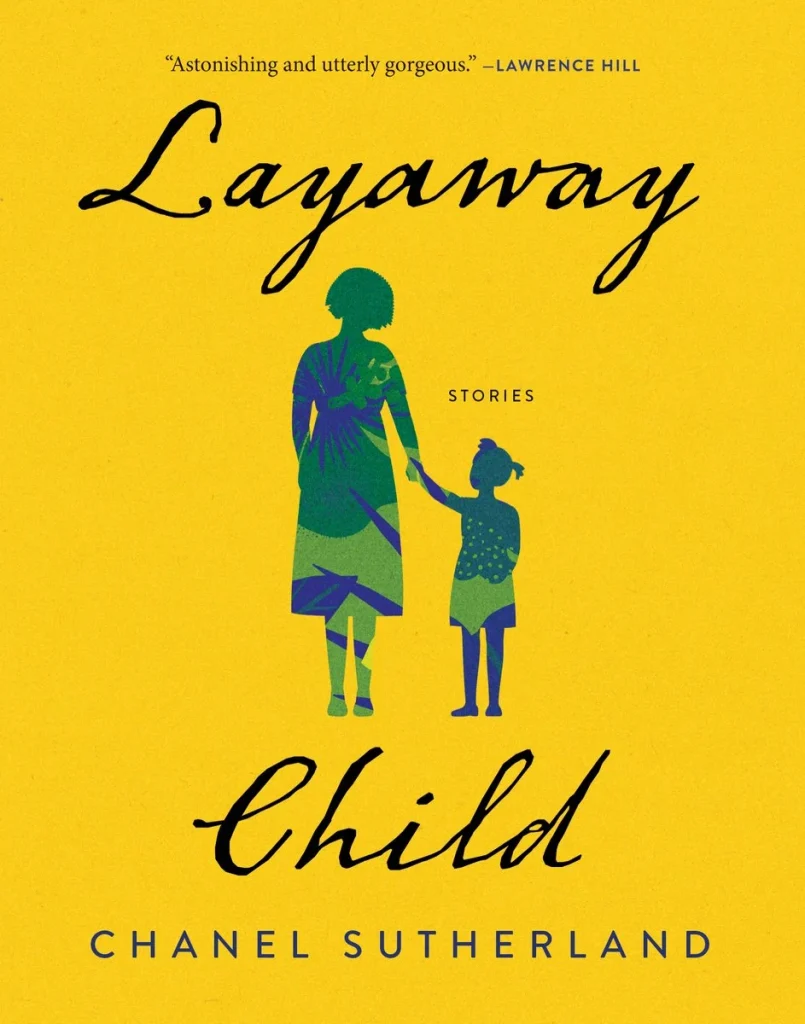
In many ways, this is the space the stories in my own book, Layaway Child, come out of—a desire to stay with these lives, and to bring what is often held at the margins into clearer view. What I return to is the question of what it might mean to remain with her. To follow the woman who leaves for work long before the world rises and returns when it is asleep. The woman who moves through spaces that depend on her but do not fully see her. To sit within that experience, rather than simply gesture toward it.
The seven books gathered here move in that direction. They resist easy explanation and refuse to turn these lives into symbols. Instead, they attend closely to the daily realities of the work, while also making space for the interior lives that play out alongside it. Together, these works offer a way of seeing migrant labor that resists simplification. They remain with the quiet, often overlooked moments, and in doing so, reveal the full and complex lives unfolding within them.
Lucy by Jamaica Kincaid
Lucy remains, for me, one of the clearest and most intimate expressions of the female migrant worker experience. A young woman arrives from the Caribbean to work as an au pair in the United States. What unfolds is not simply a story of employment, but of observation. Lucy watches everything: the family she works for, the culture she has entered, the expectations placed upon her. She understands, very quickly, that she is both essential and peripheral. By the end, what becomes clear is not just the shape of Lucy’s circumstances, but the clarity of her seeing—what it means to understand exactly where you stand, and to refuse to disappear within it.
Minaret by Leila Aboulela
Najwa, a Sudanese woman living in London, works as a domestic servant after her family’s political and economic fall. The novel follows her as she moves through the city—between households, between versions of herself—while gradually reorienting her sense of identity. Her work places her inside intimate spaces, caring for children, maintaining homes, and navigating the expectations of those who employ her. At the same time, she is reckoning with faith, memory, and loss, coming to understand that the life she once imagined for herself is no longer available to her, and that something else must take its place. What makes Minaret particularly striking is its attention to interiority. Najwa’s labor is constant but never sensationalized; instead, it becomes part of the texture of her daily life. The novel offers a clear, steady look at what it means to exist within someone else’s world while slowly reshaping one’s sense of purpose, dignity, and belonging.
How to Pronounce Knife by Souvankham Thammavongsa
This collection of short stories follows Laotian immigrants and refugees across North America as they navigate work, family, and language. Many of the characters are employed in forms of labor that often go unseen—nail salons, factories, service jobs—where repetition and precision shape their days. The stories are brief but exacting, capturing moments that reveal how deeply work can structure a life. Rather than focus on dramatic events, Thammavongsa attends to the small, telling detail: a conversation misunderstood, a task performed over and over, a body adapting to new demands. The result is a collection that shows how labor is carried not only in what people do, but in how they move, speak, and understand themselves within the world.
Win Me Something by Kyle Lucia Wu
Willa Chen, a biracial woman in New York, takes a job as a nanny for a wealthy white family, entering a world that is both familiar and inaccessible. Her role requires her to care deeply for the child in her charge, while also maintaining a careful awareness of her position within the household. As Willa moves through her work, she becomes increasingly attuned to the subtle ways she is both included and excluded. The novel explores how domestic labor extends beyond physical tasks into emotional and social navigation, revealing the complexities of care work in spaces where belonging is never fully granted. Slowly, Willa’s proximity to wealth, to whiteness, to comfort shapes her understanding of herself.
The Son of the House by Cheluchi Onyemelukwe-Onuobia
When Nwabulu and Julie, two women from different classes of Nigerian society, are kidnapped and held together, they begin telling each other the stories of their lives. Nwabulu has worked as a housemaid since she was a child, sent from home with promises that are never fulfilled. Julie, by contrast, comes from a wealthy, educated background, but finds her life increasingly shaped by the expectations placed on her as a wife and mother. he novel moves between their lives as their stories unfold, revealing how class, gender, and power influence the possibilities available to each of them. Domestic labor sits at the center of Nwabulu’s experience, shaping both her vulnerability and her sense of self, while Julie’s story exposes a different kind of constraint—one that operates within privilege rather than outside it. Held together, their narratives offer a layered account of how women’s lives are shaped in unequal but deeply connected ways.
Songbirds by Christy Lefteri
Set in Cyprus, Songbirds centres on Nisha, a Sri Lankan domestic worker who has left her young daughter in order to support her family from abroad. She works as a nanny and housekeeper, caring for Petra’s daughter and maintaining the rhythms of a household that is not her own. When Nisha suddenly disappears, the novel shifts to Petra as she searches for Nisha and, in doing so, confronts how little she truly understood about Nisha’s life. What emerges is a portrait of a woman whose presence has been essential yet largely unseen. Nisha’s story—revealed in fragments through others—captures the realities of migrant domestic work: the distance from one’s own child, the constant negotiation of belonging, and the quiet sacrifices that sustain lives across borders.
Clean by Alia Trabucco Zerán
Clean unfolds through the voice of Estela García, a domestic worker who has spent years working for a wealthy family in Santiago. Speaking from an interrogation room after the death of the family’s young daughter, Estela recounts her time in the household. Over the years, she has become deeply embedded in the family’s daily life, responsible for the child, the home, and the small, repetitive tasks that structure each day. Hers is a portrait of a life lived in close proximity and near invisibility. Estela is present for everything—meals, arguments, private moments—yet is often treated as if she were not there at all. The novel lingers in that tension, where intimacy does not lead to recognition, and where being indispensable does not mean being seen. In giving Estela the space to speak, Clean turns that invisibility inside out, revealing a voice that is observant, controlled, and no longer willing to remain in the background.
Read the original article here