The first known Filipino American memoir, Carlos Bulosan’s America Is in the Heart, was published in 1946. The next wouldn’t appear on the American literary landscape for nearly 60 years. Then, starting around 2018, something shifted: a surge of memoir and hybrid writing by Filipino American writers that hasn’t slowed down since.
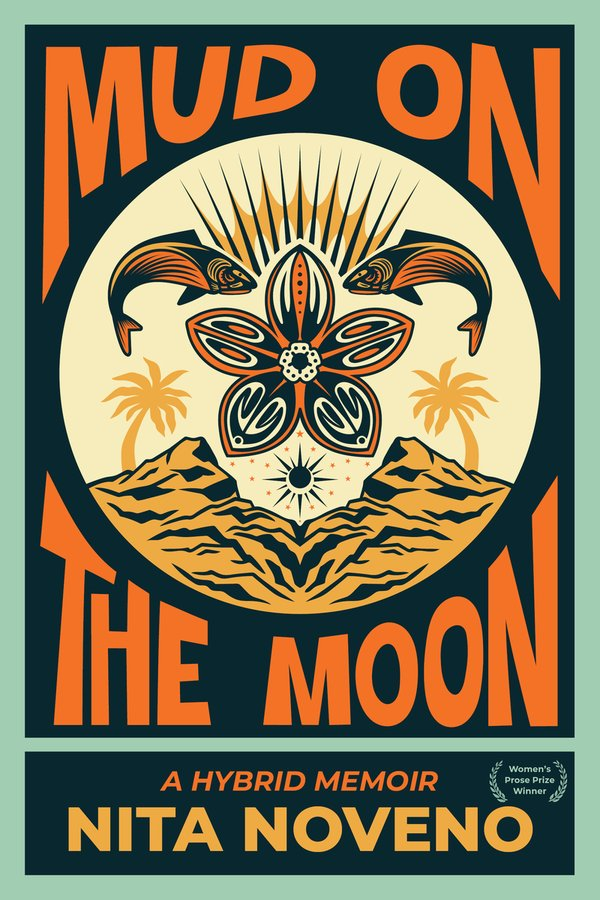
What connects this body of work across eight decades is a persistent refusal of easy narrative, though that refusal doesn’t always look the same. Sometimes it breaks the page apart, other times the refusal stays inside a single, conventional sentence, in a writer who won’t let race, gender, or genre hold still long enough to resolve into one shape. The form is the argument, whether that argument unfolds in fragments or simply refuses, page after measured page, to settle into one. My own hybrid memoir, Mud on the Moon, moves between memoir and a fictionalized reimagining of my father’s unspoken history: his arrival in the US in 1928, the same era that opens this list.
In 2021 I wrote the memoir installment for The SAGE Encyclopedia of Filipina/x/o American Studies, the first encyclopedia of its kind, mapping this tradition from Bulosan forward. This list continues that work: Eight essential Filipino American memoirs and hybrid works, spanning 1946 to 2026, that trace a literary tradition that has been formally radical all along and is only now getting the recognition it deserves.
America Is in the Heart by Carlos Bulosan
Carlos Bulosan’s America Is in the Heart, published by Harcourt Brace in 1946, is widely considered the first Filipino American memoir, though Bulosan himself called it fiction. The book chronicles his childhood in the Philippines, his journey to the United States, and the prejudice, poverty, and violence he and other Filipino migrant laborers endured working the fields and canneries of the rural West during the Depression. Bulosan blends autobiography with composite, fictionalized scenes built from the lives of the men around him, a choice that let him tell a truth no single life could contain. Eight decades later, that blurring between memoir and invention still runs through every book on this list.
The Body Papers by Grace Talusan
Grace Talusan’s The Body Papers, winner of the Restless Books Prize for New Immigrant Writing, circles rather than marches through her life, organizing chapters around the recurring subject of the body: her own, her family’s, the Philippines itself. Weaving immigration papers, medical records, and family photographs directly into the prose as structural material, Talusan narrates her childhood immigration to a white New England suburb, years of undocumented status, childhood sexual abuse, and a hereditary cancer diagnosis. The book never resolves into a single arc of triumph; instead, memories loop back on themselves, retrieving and recontextualizing what came before, mirroring how memory itself actually works.
Fairest by Meredith Talusan
Meredith Talusan’s Fairest, published by Viking in 2020, is the most conventionally narrated memoir on this list, and that’s almost the point. Talusan recounts her childhood as a boy with albinism in the rural Philippines, perceived there as white, through her education at Harvard and her gradual transition into living as a woman. Her prose moves in clear, linear sentences, but the self it describes won’t stay fixed: Race, gender, and class all shift depending on who’s looking and where she’s standing. Fairest proves that the refusal of easy narrative doesn’t require fragmenting the page; sometimes a life that won’t fit into one category is argument enough.
Nervous by Jen Soriano
Jen Soriano’s Nervous is built around a provocation: What if chronic pain is not a personal failure but an archive? As the daughter of a Filipino neurosurgeon who told her to “tough it out,” Soriano rejects the rigid model of the nervous system in favor of something more organic, what she calls “an album of waterways.” The book’s 14 essays blend science, history, and lyric prose across her own body, her family’s history, and the Philippines’ centuries of colonial trauma. Drawing on neuroscience, epigenetics, and indigenous resistance movements, she traces how intergenerational trauma is inherited through story, memory, and the body’s own biology. Healing, for Soriano, is never individual: activism is relational therapy, collective ritual. The book ends where the metaphor began, on the rivers of the Philippines, tracing water as a map of inherited trauma and showing what healing requires of all of us.
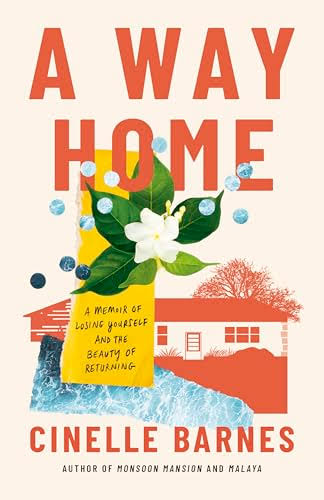
A Way Home by Cinelle Barnes
In A Way Home, Cinelle Barnes is writing a travelogue in a cafe, piecing together a journey back to the Philippines after a 20-year separation, when a ruptured brain aneurysm erases her memories, her sense of self, and her connection to her husband, daughter, and her own past. What follows is a memoir of recovery that alternates between travel writing and dispatches from recovery: medical narratives, the backstory of her adoption and immigration to America when she was young, her undocumented years in the US, and her reclamation of her Filipino identity on her own terms. Barnes writes to practice what she calls “re-membering,” stitching together the self through flashbacks, immigrant heartache, and the slow return to wholeness. At its heart, Barnes finds home in the tending of the self and others.
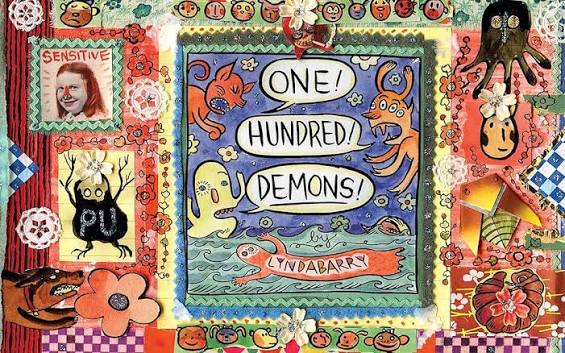
One! Hundred! Demons! by Lynda Barry
Lynda Barry, an award-winning cartoonist and MacArthur fellow, coined the term “autobifictionalography” for her graphic memoir One! Hundred! Demons!, published in 2002. In 17 full-color comic vignettes structured on a 16th century Zen exercise of painting one’s demons, Barry confronts the moments that shaped her: the worst boyfriend, a lost childhood friend, the textures and folklore of her immigrant family, race, sex, and death. Her introduction asks outright whether autobiography can hold fiction and fiction can hold truth. The book is part memoir, part creative guide, image and word working as one to render a self that refuses to sit still inside a single genre.
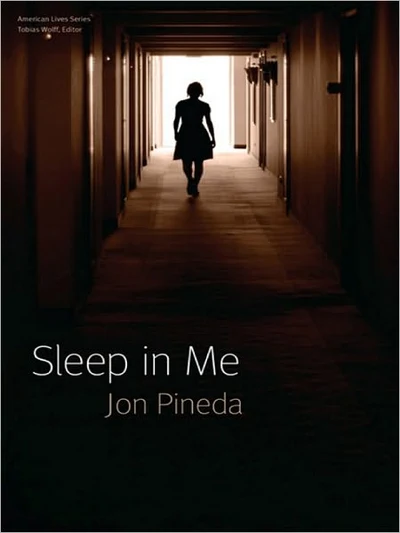
Sleep in Me by Jon Pineda
Jon Pineda’s Sleep in Me, published in 2010 by University of Nebraska Press, reads less like a plotted memoir than a sequence of poems that have shed the boundaries of their form. Pineda, a poet first, narrates his boyhood and teenage years against the backdrop of his older sister’s catastrophic car accident, which leaves her unable to walk or speak for the five years before her death. His lens widens beyond his own grief to his mother’s tireless years of caregiving and his largely absent father, the family reorganizing itself around a tragedy that touches every member differently. It’s not just the structure that won’t settle into something tidy, it’s the language itself, straining toward what can’t quite be said even as the chapters move steadily forward in time.
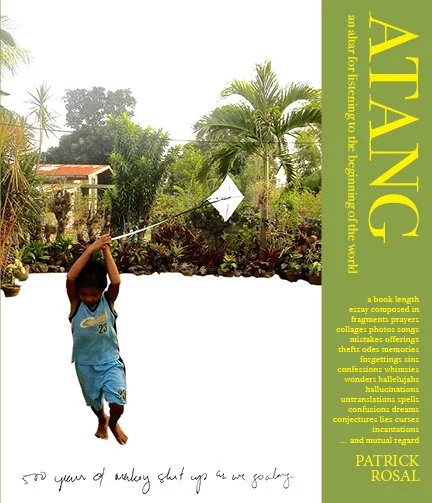
Atang by Patrick Rosal
Self-published in 2021 on the quincentenary of Lapu-Lapu’s victory over Magellan, Patrick Rosal’s Atang is a book-length essay built from fragments: poetry, prayer, collage, photographs, song, history, and memory. The acclaimed poet uses the form of an altar, an object made for offering and listening, to address colonialism, family, love, and loss, treating the dead as collaborators in the writing itself. True to the spirit of the book, Rosal released it for free, with no ISBN or retail distribution; readers can find it through his website. Of all the books here, Atang pushes hardest against the idea of what a memoir, or even a book, has to be.
Read the original article here