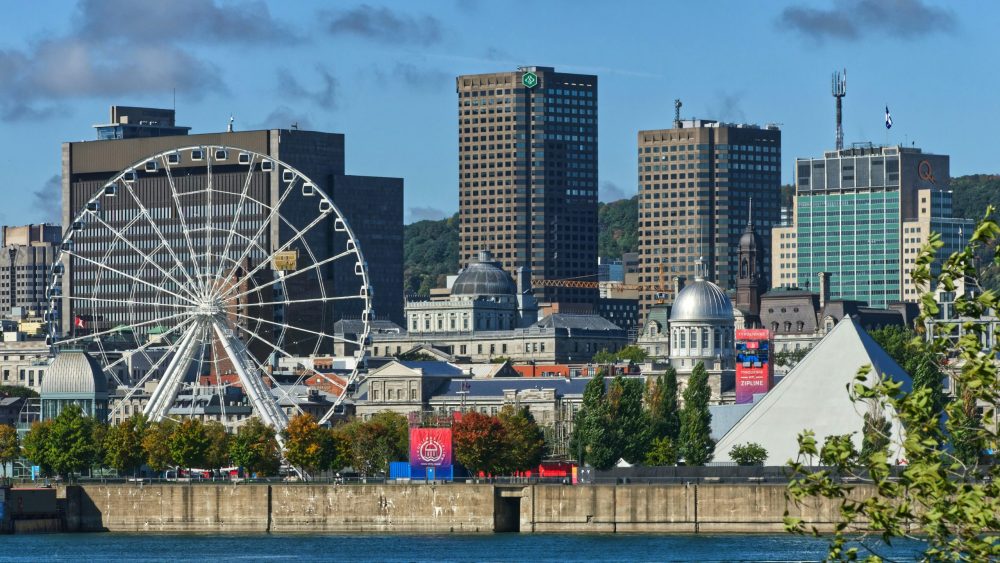
Montreal is a surging literary city with its own unique idiosyncrasies and marks of character. Compared with, say, Toronto, Montreal literature sits alongside a wider cultural scene arising from the bilingual locale with many universities, countless cultural festivals, and publishing hotspots, including the legendary indie darling Drawn & Quarterly, which specializes in graphic novels. All that and more feed a body of literature that feels somehow distinctly cool. Simply walking the streets, encountering the varied neighborhoods, landscapes, and architecture, is an inspiring experience for any writer looking to find the form for what it is they want to say.
This list of books by Québécois authors, primarily published first in French, demonstrates the city’s unique identity. Montreal is a hub of cultural contradictions, a home to many thousands of immigrants, an erotic city bursting with sensuality, a queer-friendly atmosphere set alongside deep religious roots, and a place of seasonal extremes: deadly hot in the summer (we read in parks), endlessly frigid in the winter (we read at home). There are characters around every corner, in every fresh bagel shop, independent bookstore, hip cinematheque, and lush green park. In other words, Montreal certainly has a reputation, but it’s one that is so baroque and multifarious that it always comes back around feeling unexpected. The literature of the city, particularly the books that are set within it, frequently, perhaps unavoidably, reflect this.
The list below is an attempt to offer an introduction to the city’s literary tradition. Each book takes place in or around Montreal. Patterns emerge: there are many debuts here, and many semi-autobiographical immigrant tales, and many examinations of the rural/urban divide in Québec. It is also a mixture of noted classics, alongside some less obvious examples. No matter where you start, though, you’ll be brought squarely into what makes Montreal so stubbornly singular.
How to Make Love to a Negro Without Getting Tired by Dany Laferrière, translated by David Homel
First published in 1985, Laferrière’s debut remains one of Québec’s most acclaimed and widely-read books. It tells the story of a Haitian immigrant in Montreal, surviving in the city’s poverty-stricken slums. Laferrière, himself, born and raised in Port-au-Prince before coming to Montreal at age 23, puts much of that experience into the book, which is, surprisingly, a comedy. It is also provocative, going into detail about the narrator’s interracial affairs with white women, and the deeply felt racism of the era. The narrator and his friend are also pursuers of cultural and intellectual life, finding a home within the city’s jazz and literary circles. Again, this loosely reflects the author’s own experiences of his first years in Montreal, all while sharply satirizing the city’s prejudices. In short, it’s a classic for a reason.
The Orange Grove by Larry Tremblay, translated by Sheila Fischman
Tremblay, whose primary occupation is as a celebrated playwright, wrote this tragic tale about twins, Amed and Aziz, caught in an unnamed, war-torn country. Their relatively tranquil lives in their family’s orange grove are disrupted by the ravages of an unwanted war and the troubling consequences of revenge. Early passages can be hard to bear, but Tremblay’s prose is confident and devastating in its detail. Later, the story moves to the cold winter of Montreal, as one of the twins is involved in a play about war, and his own story influences the shape that the show takes. While a short read, much is packed into these pages.

Bottle Rocket Hearts by Zoe Whittall
Zoe Whittall’s debut is a stirring Bildungsroman, evocatively placing readers in the run-up to Québec’s 1995 referendum when the province’s citizens voted on whether or not to separate from Canada. 18-year-old Eve is fired up not only about secessional politics but about queer rights and feminist ennui following the mainstreaming of riot grrrl aesthetics. Then she meets an older woman who awakens her sensibilities—sexual, political, cultural—to an even higher degree. Whittall renders this revolutionary spirit and discovery of the self and the other with thrilling directness and intensity. As a result, the city’s own intensities at that moment in history become personal.
Lullabies for Little Criminals by Heather O’Neill
O’Neill, one of Montreal’s most-beloved working writers in English, is an excellent place to start for any reader eager to immerse themselves in the life of the city. You could go with The Lonely Hearts Hotel, about two Montreal orphans in the early 20th-century, or When We Lost Our Heads, about the clash of the classes in 19th century Montreal; but your best bet would be her debut, Lullabies for Little Criminals, a rough and often dark story of a young girl with a junkie father, growing up in squalor and, ultimately, being forced to raise herself. What stands out in each novel is O’Neill’s careful attention to Montreal itself, from the dangerous to the stunningly beautiful and how the two uncomfortably overlap.
Ru by Kim Thúy, translated by Sheila Fischman
Kim Thúy, who fled with her parents from Vietnam at the age of 10 to the Montreal suburbs, hit the bestseller list with her debut, Ru, a tale of a refugee’s journey from Saigon to Montreal. The structural and temporal architecture of the book is a treat for readers, as Thúy demonstrates unbelievable control over the narrative’s back and forth, and the vagaries of memory across decades of excitement and disappointment. The book is written via fragments which accumulate into something cohesive and moving. While there are many literary explorations like this one, subtly taking apart the nuances of the American (or Canadian) dream, the specificity and verve of Thúy’s storytelling puts Ru a step above.
Whore by Nelly Arcan, translated by Bruce Benderson
Another short autobiographical book, Nelly Arcan’s confrontational story of Québec’s religious, sexual, and cultural dysfunction is, to use a cliche, genuinely raw. Like Ru, it is told mostly through vignettes, though with a more unwieldy, angry spirit. The book draws from Arcan’s rural Catholic upbringing, and it is unsparing in detailing the protagonist’s turn to prostitution. The style may not be for everyone, and Arcan’s tragic suicide adds an even heavier register to the book’s contents, but it is nevertheless an essential read for those interested in Québec history, and how it intertwines with personal trauma.
Dandelion Daughter by Gabrielle Boulianne-Tremblay, translated by Eli Tareq El Bechelany-Lynch
Gabrielle Boulianne-Tremblay, an actress, turned to literature with her debut, Dandelion Daughter, a coming-of-age story about the prejudices of rural Québec and a protagonist who realizes they were assigned the wrong gender at birth. It is a story of transgender discovery told with radical honesty and a deep understanding of character—nothing about the self is ever simple. As the protagonist moves to Québec City and then Montreal, the book excavates poetry from deep emotional wounds and demonstrates what it means to own your identity.
What I Know About You by Éric Chacour, translated by Pablo Strauss
While Chacour’s book largely takes place in 1980s Cairo, the Montreal native pulls from his own family history to tell a remarkable story about queerness and expectations. The structure is daring, as we begin in second-person narration of Tarek, taking over his father’s medical practice in the Egyptian capital, before turning to first-person, and finally to an omniscient narrator. The result, as we track the emergence of an impossible queer love for Tarek and, later on, his melancholy life in Montreal, is a gentle but sophisticated narrative about the calcifying power of secrets, and the constant reminders of how effective perspective can be as a storytelling tool.
Read the original article here