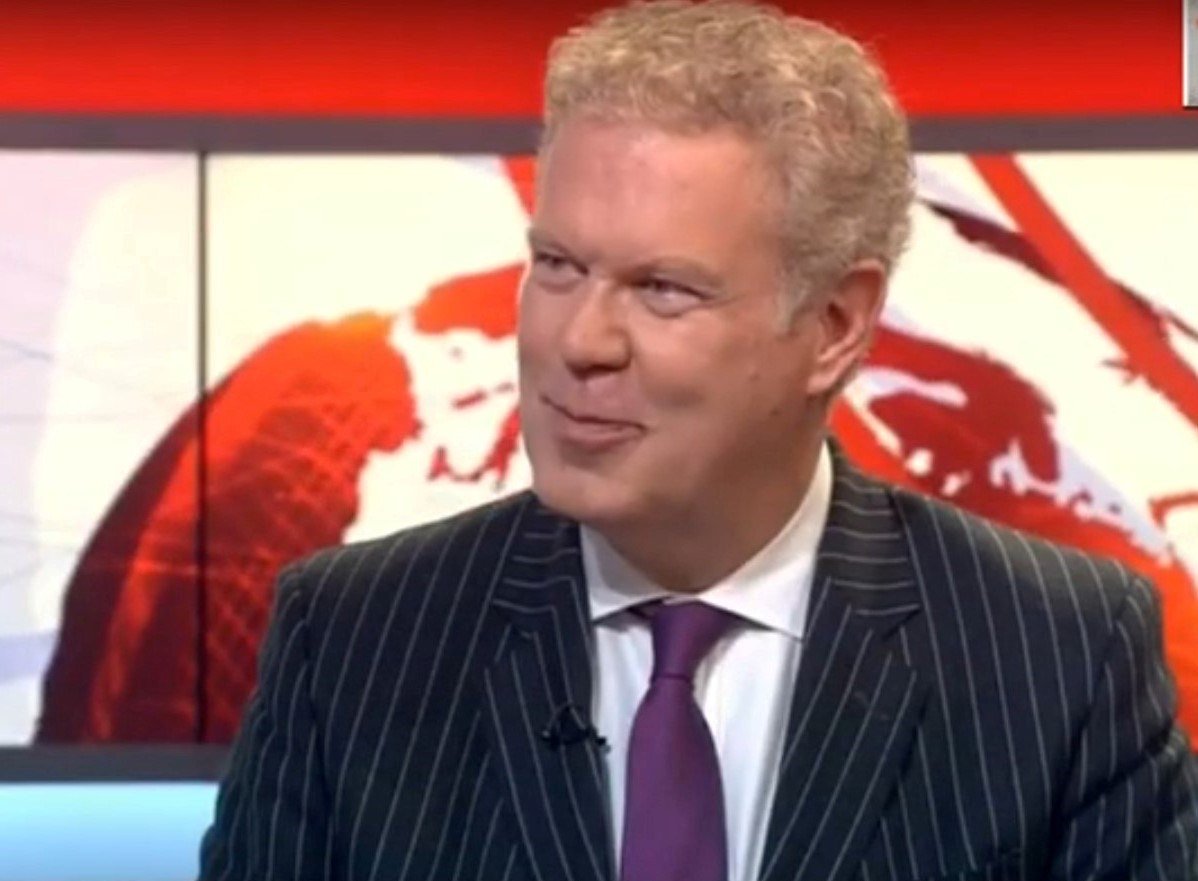
From MIPCOM Cannes and Treasure Box Japan to the BBC, Sky News Australia and a groundbreaking international licensing agreement, broadcaster, futurist and entertainment entrepreneur Andrew Eborn is helping shape the conversation about where the global media industry goes next.
CANNES / LONDON — OCTOBER 2026
The international entertainment business is changing at breathtaking speed, and Andrew Eborn has no intention of simply watching from the sidelines.
At this year’s MIPCOM Cannes, the internationally recognised broadcaster, television format creator, futurist and President of Octopus TV Ltd has been making his presence felt across the global media landscape, championing original television concepts, pursuing international licensing opportunities and challenging conventional thinking about the future of entertainment.
From hosting the prestigious Treasure Box Japan showcase to expanding his company’s international partnerships, Eborn’s activities reflect an increasingly important reality: the future of entertainment belongs to those who understand not only how to create compelling content, but how to build lasting businesses around it.
And with a worldwide licensing agreement for his innovative Fake or Fact® format, including plans for a Manga adaptation, Eborn is demonstrating exactly how intellectual property can move beyond traditional television into an entirely new world of possibilities.
Cannes, Creativity and the Changing Rules of Entertainment
MIPCOM Cannes remains one of the entertainment industry’s most influential international marketplaces, bringing together broadcasters, producers, distributors, content creators and decision-makers from around the world.
For Eborn, however, the event represents something much bigger than buying and selling television programmes.
It is a window into the future of the global entertainment economy.
Through Octopus TV Ltd, Eborn has been advancing original television formats and exploring international partnerships while examining the dramatic changes reshaping how audiences discover, consume and engage with entertainment.
One of his strongest messages from Cannes is that the industry can no longer rely on yesterday’s formulas.
“MIPCOM is a content event. You need to bring your stars to get attention, but attention alone isn’t enough. You need a format that buyers understand, audiences want to watch and partners can develop into a sustainable international business,” Eborn explains.
It is a philosophy that places creativity and commercial intelligence on equal footing.
A recognisable celebrity might attract interest, but a compelling concept, a clearly defined audience and a sustainable business model are what ultimately give a project international longevity.
YouTube, Creator-Led Studios and a New Entertainment Power Structure
Among the most significant developments dominating conversations at Cannes is the extraordinary influence of YouTube.
Once regarded primarily as an alternative to traditional television, the platform has evolved into a central force in the international entertainment ecosystem.
Independent creators are building sophisticated production companies, developing original intellectual property, launching merchandise, creating live events and cultivating audiences that rival those of established broadcasters.
The distinction between a television network, a production studio and an individual content creator is becoming increasingly blurred.
Eborn believes this transformation represents both an enormous opportunity and a serious challenge for traditional media companies.

“YouTube has changed the conversation. It’s not just about putting programmes on a screen; it’s about building an audience that wants to come back. The question for television is not whether YouTube matters. It’s whether the industry understands why it matters.”
For Eborn, the most valuable commodity in the new entertainment economy is not necessarily the number of views a programme generates.
It is the strength of the relationship between a creator and an audience.
“A view is a moment. A community is a relationship. The real opportunity is to build something people want to return to, participate in and become part of.”
That distinction has profound implications for everyone from major broadcasting corporations to independent producers launching their first projects.
The Battle for Originality in an Industry Playing It Safe
Another major concern emerging from MIPCOM is the growing pressure on television commissioners to favour established franchises, familiar formats and recognisable intellectual property.
With production costs rising and competition for audience attention intensifying, the temptation to prioritise proven concepts over untested ideas has become increasingly powerful.
But Eborn questions whether an industry built entirely around familiar properties can continue to innovate.
“Commissioners understandably want to reduce risk. Familiar brands feel safer. But if everyone commissions what has already succeeded, where does the next successful brand come from? The industry must find ways to back originality without ignoring commercial reality.”
His argument is not that commercial considerations should be abandoned.
Quite the opposite.

Eborn believes genuinely original entertainment concepts must be developed with a clear understanding of audience expectations, international adaptability and long-term commercial potential.
The challenge is to create something distinctive enough to stand out while remaining accessible enough to succeed in multiple markets.
Treasure Box Japan: Bringing Japanese Television Innovation to the World
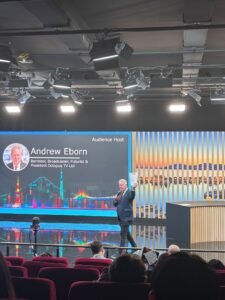
One of Eborn’s prominent roles at MIPCOM Cannes was his return as audience host for Treasure Box Japan, the international showcase highlighting innovative Japanese television formats.
Organised by BEAJ and Japan’s Ministry of Internal Affairs and Communications, the initiative introduces original Japanese entertainment concepts to international buyers, broadcasters and producers.
Japan has long been recognised for its inventive approach to television, particularly in entertainment, competition and reality formats.
The 2026 Treasure Box Japan selection featured ten programmes representing a diverse range of creative ideas:
ULTRA MISSION — Nippon TV
Tri Tag — Fuji Television
Charge Me Up! — TV Tokyo
Panic Wheel — Kansai Television
SAVE MONEY — Chukyo TV
Fort Frensy — TBS
TRADE ROOM — TV Asahi
BET ON WHAT’S NEXT — ABC TV
Tested & Ranked — MBS
Cash Stash — Yomiuri TV
Eborn’s return as host reflects his experience presenting major international events, including award ceremonies, corporate gatherings and industry showcases.
For him, the appeal of Japanese formats lies in their ability to combine distinctive cultural creativity with concepts that can resonate across international borders.
“The secret of a successful international format is not to make everything generic. It is to understand what makes the original distinctive and what makes it universal. Local specificity can be a competitive advantage, not a barrier.”
The showcase also reinforces the growing importance of international collaboration in developing and adapting entertainment properties for audiences around the world.
Fake or Fact® Goes Global Through Major Licensing Agreement
One of the most exciting developments for Eborn and Octopus TV is a worldwide licensing agreement with Zipang Inc for his original entertainment property, Fake or Fact®.
The agreement is designed to expand the concept across multiple entertainment sectors, including television, publishing, Manga, digital platforms, computer games, merchandise and live experiences.
Among the first planned projects is a Manga adaptation featuring an illustrated version of Eborn himself.

The project represents a significant opportunity to introduce Fake or Fact® to new audiences through a visual storytelling medium with international appeal.
At its heart, the format encourages audiences to question information, challenge assumptions and distinguish fact from fiction.
In an era dominated by viral misinformation, manipulated content and growing concerns about artificial intelligence, the concept feels particularly timely.
Kiyofumi Kajiwara, CEO of Zipang Inc, expressed enthusiasm for the partnership.
“We are delighted to collaborate with Andrew Eborn and Octopus TV to bring Andrew Eborn’s Fake or Fact® to a global audience. This partnership will expand the series across various media, including broadcast, licensing, publishing, digital platforms, computer games, merchandise and live events.”
Kajiwara also highlighted the companies’ history of international collaboration and the opportunities presented by the new venture.
Eborn sees the partnership as an example of how a strong entertainment concept can evolve into a much broader intellectual property business.
“I am honoured to work with Zipang to bring Fake or Fact® to a global stage, encouraging people everywhere to question everything.”
He adds:
“The opportunity is not simply to sell a programme. It is to develop an idea that can grow into a wider entertainment proposition, supported by the right partners and a clear understanding of its rights.”
The planned Manga edition marks an early step in that ambition, with additional opportunities across entertainment and licensing categories under consideration.
From Cannes to the BBC: Andrew Eborn as Devil’s Advocate
While expanding his international entertainment business, Eborn continues to maintain a prominent presence in broadcasting and public affairs.
His appearances include the BBC, Sky News Australia and News 24, where he examines political developments, royal affairs and the issues shaping international debate.
One of his distinctive broadcasting roles involves returning to the BBC as Devil’s Advocate, challenging assumptions, testing arguments and encouraging a more thorough examination of competing perspectives.
Rather than simply reinforcing established opinions, Eborn’s approach is built around questioning the evidence and encouraging constructive debate.
“My job is not simply to repeat the accepted narrative. It is to ask the questions that test it. We need more light and less heat, and we must be prepared to not just ask the questions but question the answers.”
A recent BBC discussion explored the Rights for Nature initiative and proposals for a UK Rights of Nature Bill.
The debate examined whether nature should be recognised as a legal subject and considered the implications for environmental protection, governance and accountability.
Eborn’s participation reflects his broader interest in examining complex issues from multiple perspectives and identifying common ground.
It also complements his entertainment activities, where questioning conventional wisdom has become a recurring theme.

Artificial Intelligence, Vertical Video and the Next Generation of Storytelling
Few developments are transforming the entertainment industry as rapidly as artificial intelligence.
From research and production planning to localisation, distribution and content development, AI is creating opportunities to improve efficiency and expand creative possibilities.
But Eborn is equally concerned about the legal and commercial questions surrounding its adoption.
Who owns AI-generated material?
What happens when copyrighted works are used to train artificial intelligence systems?
Who grants permission, and who receives the financial benefits?
“AI may change how content is created, but it doesn’t make the question of ownership disappear. Who owns the output? Whose material was used? Who gave permission? And who benefits commercially? These are questions the industry cannot afford to ignore.”
Another major trend attracting attention is the rapid expansion of vertical video and mobile-first microdramas.
These shorter storytelling formats are creating opportunities for producers to reach audiences who increasingly consume entertainment on smartphones.
However, Eborn argues that success requires more than simply reducing the running time of traditional television programmes.

“You cannot simply take a television programme, cut it into pieces and call it a new format. You have to understand the platform, the audience and the storytelling. The question is not how short you can make a programme, but how compelling you can make every second.”
It is a reminder that technological innovation must ultimately serve the storytelling rather than replace it.
Octopus TV: Building Entertainment Properties With International Potential
As President of Octopus TV Ltd, Eborn oversees the development and commercialisation of original entertainment formats designed for international broadcasters, producers, publishers and digital platforms.
The company’s portfolio reflects his interest in combining intelligent entertainment with strong commercial potential.
The Andrew Eborn Show — In London Town Tonight brings together entertainment, interviews, topical discussion and international perspectives, positioning itself as a television equivalent of the Sunday newspapers.
Andrew Eborn’s Fake or Fact® challenges audiences to distinguish truth from misinformation while offering opportunities for expansion across multiple media.
Andrew Eborn Devil’s Advocate / Common Ground explores competing viewpoints through thoughtful questioning and constructive debate.
Meanwhile, Andrew Eborn’s Book of Failure® examines how mistakes, setbacks and unexpected challenges can become the foundations for innovation and success.
Together, these concepts demonstrate Octopus TV’s commitment to developing original intellectual property that can move between platforms, territories and audiences.
Why Ownership and Intellectual Property Matter More Than Ever
Beyond the excitement surrounding new platforms and emerging technologies, Eborn believes one of the most important questions facing the entertainment business remains remarkably straightforward.
Who owns the rights?
With major mergers, corporate consolidation and changing distribution models reshaping the industry, independent producers must understand how their intellectual property is controlled and monetised.
A successful television concept may generate opportunities in publishing, gaming, merchandise, licensing and live entertainment long after its original broadcast.
But those opportunities depend on the agreements established at the beginning.
“A programme is not just a programme. It can be a brand, a format, a publishing opportunity, a game, a live experience or the beginning of an international licensing business. But you must understand your rights before you can understand the full value of what you own.”
It is an especially relevant message for emerging creators entering an entertainment landscape where traditional gatekeepers no longer control every route to an audience.
Andrew Eborn and the Future of Global Entertainment
If there is one message emerging from Andrew Eborn’s activities at MIPCOM Cannes, it is that the international entertainment industry is entering a period of extraordinary reinvention.
YouTube is changing the relationship between creators and audiences.
Artificial intelligence is transforming production while raising difficult questions about ownership.
Vertical storytelling is creating new viewing habits.

International partnerships are helping distinctive concepts cross cultural boundaries.
And original intellectual property is becoming an increasingly valuable asset in a fiercely competitive global marketplace.
For Eborn, these changes are not simply challenges to overcome.
They represent opportunities for creative entrepreneurs willing to think beyond established industry structures.
His work at Cannes, involvement with Treasure Box Japan, international broadcasting appearances and expanding licensing partnership with Zipang Inc all reflect a career built around connecting ideas, people and markets.
As he explains:
“The future of entertainment is not simply about who makes the most content. It is about who understands the audience, who owns the rights, who builds the strongest partnerships and who creates something people want to return to.”
And perhaps his most important observation sums up the future of entertainment perfectly:
“Attention gets you noticed. Creativity gets you remembered. And intellectual property gives an idea the opportunity to travel.”
For Andrew Eborn and Octopus TV, the journey from Cannes to the international entertainment marketplace is clearly about far more than selling television programmes.
It’s about creating ideas with the potential to become global entertainment brands.

About Andrew Eborn
Andrew Eborn is an international broadcaster, non-practising barrister, author, strategic business adviser, futurist and President of Octopus TV Ltd. His work spans television, international entertainment, intellectual property, technology and emerging media.
He has appeared on the BBC, Sky News Australia and other international broadcast platforms and is the creator of Fake or Fact® and producer and presenter of The Andrew Eborn Show.
Watch Andrew Eborn’s showreel: https://youtu.be/VvScTDAdQOw
Website: https://www.octopus.tv
About Octopus TV Ltd
Octopus TV Ltd develops and commercialises original television formats, entertainment concepts and intellectual property for international broadcasters, production companies, publishers and digital platforms.
Media Enquiries
Andrew Eborn
President, Octopus TV Ltd
Email: Andrew.Eborn@OctopusTV.com
Website: https://www.octopus.tv