This article is free to read. So is every article Electric Literature publishes. No limits, no paywalls—now or ever. Support from readers like you makes that possible.
We need to raise $60,000 to start off 2027 strong. Donate now to our end of year fundraiser to help ensure the future of free, accessible literature for all.
—————
It’s been, in my opinion, an excellent year for novels. So excellent that this list was exceedingly hard to whittle down. We had long-awaited books from beloved authors like Marlon James, Min Jin Lee, and Ben Lerner—occupying vastly opposite ends of the page-count spectrum—and countless exciting debuts. But what’s thrilled me most about all the books I’ve read this year is how strange, distinct, and utterly human they are.
I’ve expounded before on the value of literature in the age of AI, but we are another year deeper into its all-too-rapid encroachment on our art, so you’ll have to forgive me for getting up on my soapbox once again. As em-dashes are being described as a hallmark of AI-writing rather than as a writer’s favorite punctuation mark to overuse, now co-opted by the machines who stole from us, I’ve found myself asking: What, exactly, makes art human? If we are being asked to rethink even our grammar choices so as not to be mistaken for robots, how do we make art that is profoundly and undeniably our own?
I can’t say whether or not the authors on this list were writing with this question in mind, but I can say for certain that for me, their books are answering it. Our favorite books of 2026 got weird, in every sense of the word. They got creative on a line-level, on a structure-level, on a content-level. They are utterly distinct in their voice and style, from Scott McClanahan’s Fights! to the numerous narrators of The Disappearers, each instantly identifiable by voice. Some grapple with existential questions about our technological age more directly: Ben Lerner entangles our modern digital-reliance with questions of memory; in Earth 7, it’s unclear whether a love interest is or is not a robot; Attention-Seeking Behavior questions the nature of truth.
Last year, in an editorial meeting, several of my colleagues and I were wondering what would happen to literature as AI became bigger, louder, and more insistent on its presence in our daily lives, whether we want it or not (and if the recent blue tsunami votes on data centers are any indication, the overall consensus is not). The one silver lining I could find was the hope that it might embolden writers to be weirder. More distinct. More themselves. Less afraid. If the books on this list are any indication, writers are doing exactly that. My hope now is that each of these beautiful, varied, dynamic works might remind you of what it means to be human.
–Katie Henken Robinson
Deputy Editor
Editor’s note: The following books were hand-selected by Electric Literature staff and interns, with the help of our community of contributors, readers, and friends of the organization. While books by current staff or board members are not eligible for consideration, we would like to informally recommend The True Confessions of First Lady Freeman by board member Deesha Philyaw, another novel we loved this year! The 10 titles below are presented alphabetically by title; they are not ranked.
Afternoon Hours of a Hermit by Patrick Cottrell
In Afternoon Hours of a Hermit, Patrick Cottrell’s deeply moving and utterly arrestingsecond novel, Dan Moran, a transmasculine Korean adoptee returns home on the eve of his dead brother’s memorial dinner. Estranged from his family, he embarks on a search in the wake of his brother’s death: he searches for the women who knew him, acting as a detective, longing to better understand how his younger brother understood him. Heartbreaking, absurd, and incredibly intimate, this novel will leave you questioning everything you thought you knew about yourself, about making art, about the world.
–Denne Michele Norris, Executive Director and Publisher
Attention-Seeking Behavior by Aea Varfis-van Warmelo
I’ve been thinking a lot about the line between fact and fiction. I notice the blur of its movement in every social media post, I see its oscillation in the big blue eyes of Elizabeth Holmes, in the collective fictions that move the stock market. The question of what is true—or, maybe, the question of what is truth—is the white-hot center of Aea Varfis-van Warmelo’s debut Attention-Seeking Behavior. The novel’s narrator is a young woman living in London. Her story opens with a direct address: “You should know,” followed by a confession: “when I found the body I did not scream.” It’s a killer first line and a disturbing first scene—in it, the narrator also admits to feigning humanity when reporting the body, to finding the death immaculately beautiful, and to eating a croissant immediately after her discovery. Perhaps more disturbing, the scene ends in an acknowledgement: “There is no way to prove that it happened, but why would I lie?” Of course, asking the question is itself slightly suspect, but it queues the novel up perfectly. If it’s a question you’re interested in pressing against, you’ll find no better place.
–Wynter K Miller, Director of Operations and Fiction Editor
Earth 7 by Deb Olin Unferth
Even in the strangest of circumstances, love persists. Even if you’re (possibly) a robot and an ocean-pod-raised woman meeting on an artificial beach. But Earth 7 is so much more than a love story; Deb Olin Unferth is interested in big questions, such as why we love at all, and what drives us to keep living no matter the state of the world. Embracing the strangeness of speculative fiction in order to get at the heart of what makes us most human, this novel packs an outsized philosophical punch for its slim size. It may be just the book we need as the climate crisis only grows in scope.
–Rachel Maybee, Editorial Intern
Famous Men by Julie Buntin
Julie Buntin interrogates the seductive pull of literary lineage in Famous Men. Growing up in small-town Michigan, Wilhemina “Will” Miles devours the work of celebrated author Nathaniel Fellow, suspecting he might be her biological father. When she moves to New York and becomes his assistant and student, their boundary-blurring dynamic tangles creative ambition with desire and dependency. Throughout the novel, Buntin traces the way power disguises itself as taste, mentorship, and artistic rigor, leaving Will to confront the fact that the voice which inspired her to imagine a life devoted to writing is inextricable from harm. That tension makes the novel gripping, and Bunton shows with remarkable clarity how the desire for a literary life can feel as intimate and dangerous as love.
–Shandela Contreras, Editorial Intern
Fights! by Scott McClanahan
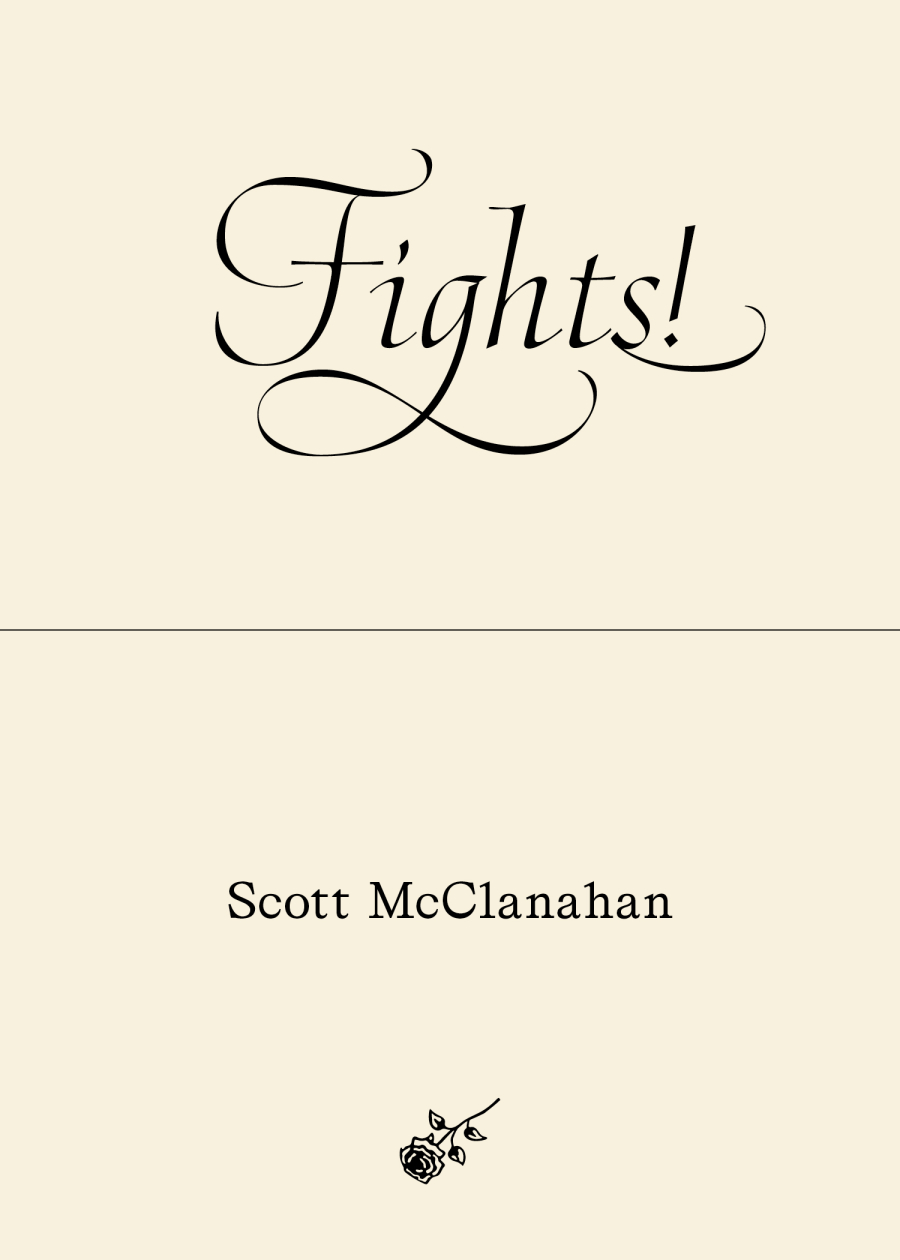
I have without a doubt recommended Fights! to more people than any other novel this year. Fights! is a kind of miracle book. It’s weighty, but if you catch its wave, you’ll read it in a night. It’s about publishing books in NYC and West Virginia in the 2010s; it’s also about loving people, working and being unable to work with people you love, and finding a way to sustain love even when a relationship collapses, a person dies, a life changes. McClanahan’s language has a subtle way of folding itself around the reader. As I read Fights! for the first time over the course of a long night, anecdotes, stories, emotions—all a far cry from my life—seemed to become my own in the most unexpected and intimate ways. McClanahan wrote a list for EL about stealing from other writers while he wrote Fights!, but for the life of me, this is among the most personal and honest novels I’ve read. I’d love to know how McClanahan manages to steal and tell the truth so well.
–Willem Marx, Associate Editor
Honey in the Wound by Jiyoung Han
This multi-generational epic, which approaches the tragedy of “comfort women”—women forced into sexual slavery by Japanese imperialism—with empathy and grace, sets a high bar for a debut novel. Jinyoung Han has earned her place in the must-read canon of magical realism, right alongside classics like One Hundred Years of Solitude. Giving voice to the victims of the brutal Japanese occupation of Korea through three generations of women with magical abilities, Han expertly balances inextinguishable hope with the reality of despair. Every detail has been accounted for: history, folklore, character, and a cleverly shifting writing style make this tightly woven narrative unforgettable. You can read more about Han’s research process and inspirations in our interview with her.
–Rachel Maybee, Editorial Intern
The Disappearers by Marlon James
It feels like cheating to include this book on a list of top 10 novels of the year, and yet the list would be incomplete without it. James tells the story of a brutal hate crime committed against a group of gay men rehearsing a play at the height of the AIDS epidemic, following the many branching tendrils of the event’s aftermath. The novel is unflinching in its portrayal of the violence woven into queer life in Jamaica in the 1980s, and yet it never reduces its characters to tropes or the trauma of its story to a mere plotline. The characters are real and unforgettable: irreverent, funny, erotic, smart, pained—and above all, wholly unique. The Disappearers is the type of book that will never leave you once you’ve read it. As a bonus, read Marlon James’ illuminating interview with EL.
–Katie Henken Robinson, Deputy Editor
The Great Wherever by Shannon Sanders
In The Great Wherever, Shannon Sanders turns family land into a crowded, haunted room where the living do not get the final word. Grieving her father and reeling from a breakup in DC, Aubrey Lamb steps into partial ownership of a century-old Tennessee farm, only to find her deceased relatives hovering nearby, offering a running, sharp-tongued commentary on her life. Sanders traces the property to its enterprising patriarch, Thomas Lamb, and balances caustic family humor with the urgent fight to protect Black-owned land from predatory developers. For Aubrey, holding ground becomes the exhausting, necessary labor of facing down the dead’s exacting expectations while deciding what remains uncompromised. The Great Wherever is a warm, delightfully sharp portrait of legacy.
–Shandela Contreras, Editorial Intern
The Hill by Harriet Clark
In Harriet Clark’s remarkable debut, The Hill, a young girl named Suzanna visits her mother in prison every week. Her mother is serving a life sentence, and these visits come to organize nearly every aspect of Suzanna’s life. I was particularly moved by Clark’s strange inversion of the coming-of-age novel: Rather than seeking independence, Suzanna is reluctant to launch herself too far into the world for fear of leaving her mother behind. What stayed with me was the way incarceration distorts the experience of time, turning even the ordinary passage from childhood to adulthood into something fraught with guilt and obligation.
–Evander Reyes, Communications Manager
Transcription by Ben Lerner
Of Ben Lerner’s four novels, Transcription may be the one that best captures his distinct ability to transform and amplify the mundane. The book is both symmetrical and spiraling, revealing resonance as it descends into its own material. The Lerner-esque narrator returns to Providence for a final interview with his mentor, Thomas. As he walks through the city of his alma mater—which he attended with Thomas’s son, Max—time collapses between the present and past. When he finds himself without a way to record Thomas during their interview, he turns to an unreliable scribe: his own memory. The consequences of this decision ripple through the rest of the novel: across the narrator’s parallels with Max and in the book’s relationship to technology and connection. Transcription is also about fatherhood and responsibility. It depicts the unexpected kindnesses—and devastations—that our revisionist memories can inflict, and asks: Is it inevitable to misunderstand—and be misunderstood by—the people we care most about? While there’s no clear answer, there is great feeling to be found in these pages.
–Lennie Roeber-Tsiongas, Assistant Editor