
It can track your dog beyond the reach of cell towers.

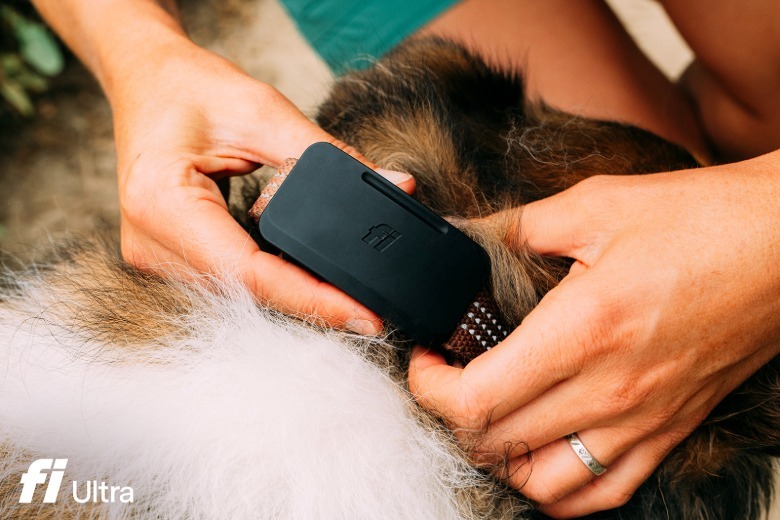
Fi has launched a new dog tracker meant for the most adventurous owners and pets… or maybe even people like yours truly, who are paranoid about losing their lap dogs somehow. The new Fi Ultra is powered by T-Mobile’s T-Satellite with Starlink service, so that owners can keep tracking their dogs even if they venture beyond the reach of a cell tower. It can track a dog’s location anywhere in the US, even in rural areas and deep into the backcountry.
The device automatically switches from LTE when it’s available to T-Satellite when networks are out of reach, without the owner having to do anything. It delivers continuous location data to owners, no matter where the dog is. There is, however, a catch. Since its GPS is always on, among other factors, it doesn’t last as long on a single charge as older Fi trackers. While the Fi Series 3+ devices can last anywhere from two weeks to three months, depending on the dog’s activity, the Fi Ultra can only last two days or so. For owners who want peace of mind whenever they take their dogs hiking or climbing, though, charging more frequently is most likely worth it.
In addition to the features above, Fi Ultra also comes with the company’s “callback” training system that uses sounds and vibrations to get dogs to go back to their owners on command. Owners can trigger “Lost Mode” from the Fi app to activate heightened tracking if they lose sight of their dogs. There’s also a feature called “Search Party,” which can get nearby Fi users to help detect a dog’s tracker if their owner has activated Lost Mode. Soon, the company will also roll out Safe Zone boundary sound and vibration triggers for the tracker.
Fi Ultra is compatible with most standard collars and harnesses. It will cost new members $199 for the tracker itself, plus a $20 activation fee and a subscription that costs $189 a year. People who already have an existing membership for the Fi Series 3+ and Mini devices can get the tracker for $299 and just add it onto their current subscription.
 Fi
Fi
Read the original article here