Her Life in Seattle Doesn’t Translate to Beijing
“Yulan” by M Lin
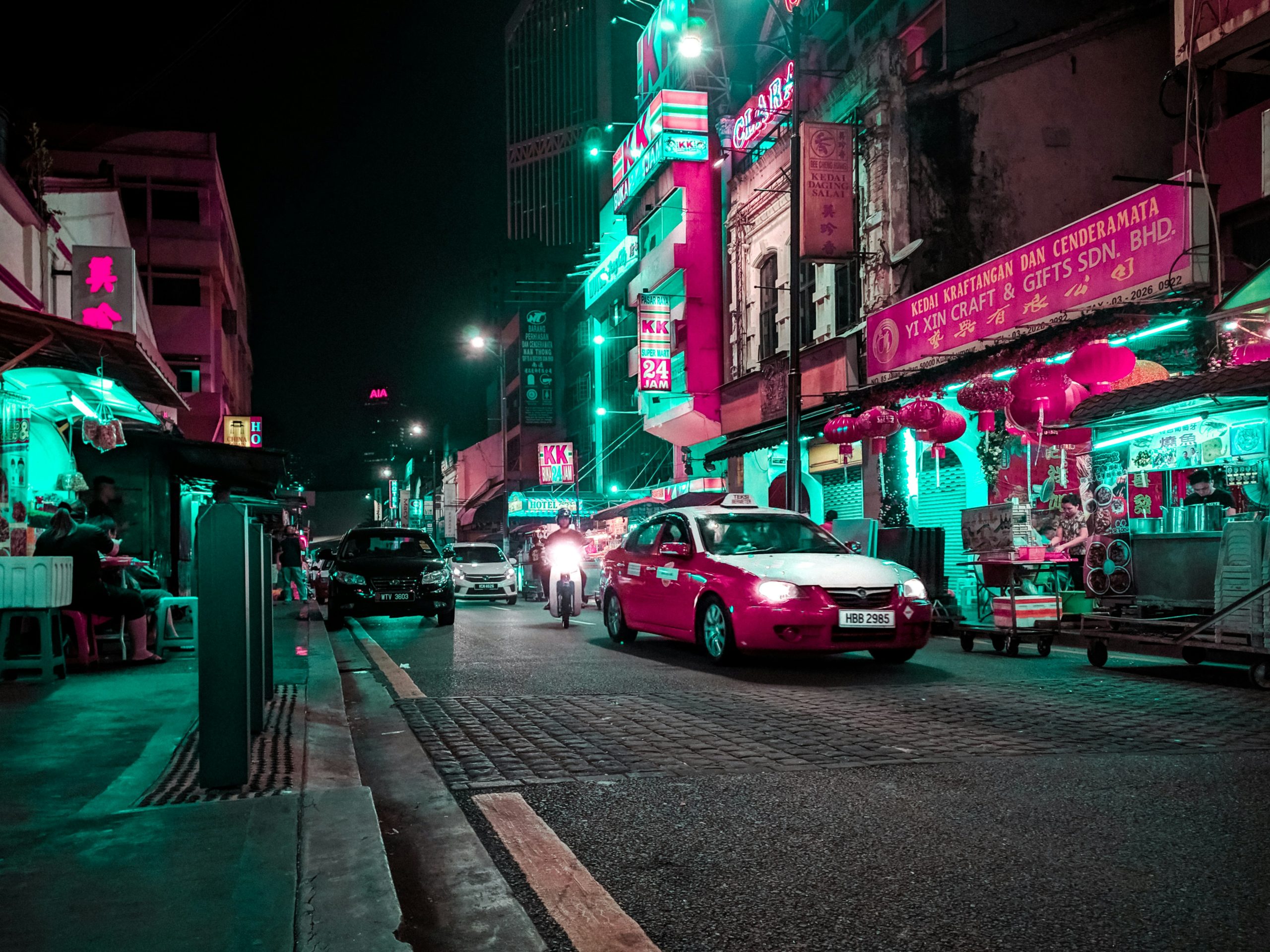
Yuchen sat in the back of the taxi as it turned onto Chang’an Avenue. Seventeen years ago, she had biked to high school on this ten-lane boulevard every day. So, so wide, she thought then. It had made her feel small.
She rolled down her window and let the breeze carry her hair into a frenzy. Tiananmen Square dark on the left, Tiananmen Tower lit up on the right. Chairman Mao’s Mona Lisa smile had looked benign to Yuchen as a child, the look of a gentle grandfather, but now the portrait seemed menacing, as if it could, any second, turn into a scowl. There were many situations in which Yuchen couldn’t be sure if or how she had changed, but in this moment, she was confident that neither Tiananmen Square nor Chairman Mao’s painted face had been altered; it was that she was no longer as Chinese as she used to be. But what did she mean by Chinese? It was a categorical adjective one would only use from the outside looking in: This was Chinese, that was not so Chinese. There was no such distinction from the inside. Perhaps that was what Yuchen meant: not less Chinese (how could she be less Chinese if she was, immutably, Chinese?), but outside Chinese.
Spring was Beijing’s shortest season and Yuchen favored it for its transience. The heat and humidity were timid in the air. Something smelled nostalgic. Was it possible that the air was scented with the past because she was headed to see old friends? After two IVF cycles, Yuchen no longer trusted her emotions, but analyzed them in therapy-speak and hormonal mumbo jumbo. She craned her neck out the window, getting a stronger whiff of the fragrance.
Guniang, don’t stick your head out, the taxi driver said into the rearview mirror.
No one had called her guniang in a long time. The gendered form of address was respectful but familiar, not infantilizing, not remotely flirtatious in this context, a state of relating that was missing in English, in which most of her present life unfolded.
She did as she was told. When she was growing up, Beijing taxi drivers were infamous for regarding themselves as all-knowing. Maybe he would know the air’s peculiar ingredients.
Do you smell that, shifu? Something floral?
The taxi driver loved yulan flowers. A Beijing native, he had spent his childhood in hutongs not far from Tiananmen, and when the hutongs were demolished, his family moved to the South Fourth Ring Road, where yulan trees did not grow. He knew that the ones on Chang’an Avenue blossomed first every spring, followed by those in the Summer Palace, then in the Sculpture Park on the west side, and Buddhist temples in the surrounding mountains. He, and most municipal taxi drivers, took pride in their hometown, the great capital of their great country.
See those white flowers by the redbrick walls? the taxi driver said. That’s yulan.
Yulan, of course. Yuchen closed her eyes to focus on the subtle aroma. It swirled in her nose, continued toward her brain—Yuchen did know this smell, this flower, but she couldn’t remember from when or where, her familiarity with it completely strange.
You’re not from Beijing, are you? the taxi driver said, interrupting her reverie.
Sure I am, Yuchen said, defending herself in an exaggerated Beijing accent, opening her eyes eagerly. I just haven’t been back in a few years.
Before she left China at eighteen, Yuchen had thought her Beijing accent equaled standard Mandarin, until she realized that her college friends from southern China couldn’t understand her excessively rhotic vowels and the way she liaised words together like she was speaking French. Over the years, she took care to tone it down, straightening her tongue and enunciating every character. Now Yuchen spoke both her mother tongue, Mandarin, and her second language, English, with no particular geographical association—so blandly she bored herself.
I couldn’t tell from your accent but I hear it now, the taxi driver said with a chuckle. Where do you live these days?
United States.
Where in the US? New York? Los Angeles?
Seattle.
I know Seattle! Sleepless in Seattle! And that Tang Wei movie—Beijing Meets Seattle. What do you do in Seattle?
I’m a photographer.
Like for weddings?
Yuchen debated the answer. She could lie and say yes, or she could throw a rock into the lake and see how it would ripple.
For art. I’m an artist.
You make art!
The taxi driver nodded, glancing into the rearview mirror with a newfound sense of intrigue. He thought his artist passenger looked old enough to be married, or even to be a mother. His own daughter was thirty-one; her son would turn two next month. He knew that artist types might lead unconventional lives, but he thought he could do a good deed for her parents.
You have kids?
No.
Married though?
Yuchen nodded. She averted her eyes from the reflection of the taxi driver’s scrutinizing look and feigned contemplation of whatever was outside the window. They turned off Chang’an Avenue. A brief silence that Yuchen wished would last.
You look my daughter’s age, the taxi driver continued. It’s better for women to have kids while young.
Yuchen offered no response, hoping if she neither agreed nor disagreed, their conversation would end here.
Your husband is us Chinese or a laowai?
He is American, but his parents emigrated from Hangzhou years ago.
So he speaks Chinese?
He can understand some.
That must be difficult for your parents. You are an only child, too, right?
Yuchen told him that she was born in 1987. The taxi driver said, with sincerity, that he would never let his only daughter marry a foreigner, lamenting again how inconvenient it must be for Yuchen’s parents. Yuchen tried a smile.
So which one do you like better: the US or China? the taxi driver asked.
It always came down to the same ultimatum. Yuchen used to attempt an honest answer, which varied depending on current affairs, context, or mood. But by now she had learned that there was only one correct answer.
Has to be our own country, she said. No doubt about it.
Yuchen followed a lanky boy through the KTV’s maze of hallways. He walked ungracefully, as if his limbs were trying to break free from his oddly formal uniform: a white dress shirt, a black waistcoat, and a maroon bow tie. He walked so fast, almost running, and Yuchen imagined that the boy hurried everywhere and still fell behind all the time. She wanted to tell him that he could slow down, she was not in a rush, but she stayed quiet and quickened her steps. Anything she said might make the boy feel worse, adding to the things he already thought he was doing wrong in life.
Before Yuchen realized that they had arrived at Room C10, the boy was already pushing the door open. First the music, a melancholy Faye Wong song, then the collective exclamation from her old friends, whose faces she hadn’t seen in so long that she couldn’t immediately remember their names. Some were standing up, one walking toward her. In an instant, memories of countless karaoke parties during their high school years coalesced into reality, washing over her like an ocean wave crashing onto the shore, unstoppable. She turned around to thank the boy, but he already had his back to her, whispering into his earpiece, hurrying away.
Yuchen—we were just talking about you! Xiaohan, a short woman with a fashionable bob, swung her arm around Yuchen, leading her into the room.
What were you saying behind my back? Yuchen teased.
Without a word, the crowd on the couch parted to make space for her in the center. She looked around the room—he was not here. Thanks to the atmospheric lighting, no one noticed that Yuchen’s eyes had just dimmed. In a way, she was relieved. As much as she wished to see him tonight—who wouldn’t be curious to find out how your first love had turned out?—she had also been nervous about the possibility, at the thought of how she might be reflected in his eyes.
We were saying that you were the class flower! All the boys had a crush on you, Xiaohan said.
Even at thirty-six, Xiaohan could register her body’s involuntary response when Yuchen was in the same room: Her insides twisted and twinged, a tangle of jealousy and admiration. She knew objectively that as an adult, Yuchen no longer stood out, not in any way that mattered: She wasn’t the richest or the most famous, her face was not the fairest or the smoothest, her edges were rounded, her husband was not particularly handsome in her pictures, and she remained the only woman in this room who was not yet a mother. Was Yuchen possibly infertile? She herself was a mother of two and she loved her kids most days. But look at the way everyone shifted places just so Yuchen could sit right in the middle, despite her arriving late—what Yuchen was to the people in this room was never going to change. The same was true for all of them. To be who they had been to each other, even for a few hours, was the essence of these high school reunions.
Someone asked Yuchen whether she wanted whiskey or beer.
I’m not drinking tonight, Yuchen answered. Just tea, please.
Are you preparing for pregnancy? Xiaohan asked.
Yuchen hesitated. She couldn’t manage any follow-up questions if she answered honestly, that yes, she had come home at her mother’s request to undergo a Chinese medicine fertility treatment; and yes, she had had two miscarriages, which made her feel like a failure, even though her husband had been kind and she knew her femininity wasn’t defined by motherhood; and yes, she was trying for pregnancy even though she was not sure if she wanted children at all.
No, Yuchen said. Alcohol gives me headaches. Getting old, you know.
Yuchen is an artist, Xiaohan, not a housewife like you! another classmate said.
In Xiaohan’s opinion, an artist was a glorified housewife anyway; art was not real work. Xiaohan wedged in next to Yuchen, keeping her mouth shut.
Housewife is the hardest job in the world, Yuchen said, giving Xiaohan’s shoulder a gentle squeeze. Xiaohan, thanks for inviting me. I haven’t seen you guys in forever.
Did you come for work this time? Xiaohan asked.
Both her Chinese and American friends often questioned the purpose of her trips to Beijing, as though the logic of an adult life could not accommodate such a sentimental luxury as simply going home.
I haven’t seen my family in a while, Yuchen answered. But maybe I’ll do some work, too, while I’m here.
The logic of an adult life could not accommodate such a sentimental luxury as simply going home.
An artist’s life is so free! Xiaohan exclaimed. When will you show your work in Beijing? Give us an opportunity to show up for you.
I’m working on a project about the idea of borders and border-crossing, not only geographical but in the most expansive sense, even including trespassing, but Chinese galleries are very cautious these days—I’m not sure if they would be interested.
Easier to blame the system for the lack of interest, Xiaohan thought. She’d seen Yuchen’s WeChat posts about her exhibitions abroad. From the name of the venue to her photos, everything seemed intentionally obscure, just like the way she was speaking now, what with the idea of borders and trespassing.
Well, just don’t forget your old classmates when you have a homecoming show, Xiaohan said.
Yuchen felt relieved when the intro to Xiaohan’s song started playing. She knew that Xiaohan’s interest did not lie in her work but in finding a fathomable way to measure its success. The truth was that she hadn’t been able to focus on creating anything in a while. The doubt and frustration from those cold and costly procedures spread surreptitiously inside her like a virus. When she could not contain those feelings any longer, they spilled out of her body, into the air she breathed, infecting everything she touched—her furniture, her camera, her husband.
Once the initial attention to her waned, Yuchen participated in the conversation as much as she could. The women talked about men, children, gossip, and anti-aging skin care, while the men talked about everything else. No one talked about politics. Yuchen used to be interested in how these friends, some of whom had never left China, thought about what she could only watch from across the ocean. She worried that her idea of home was becoming imaginary, skewed by Western media, drifting away from reality. On occasions like tonight, she used to try to find out what was actually going on in China, but she had stopped bothering since a few trips ago. The Chinese news was so censored that most people didn’t even know what she knew. Or if they did, they didn’t care—what was actually going on in China was exactly this: regular people drinking, singing, having a great time, without giving a shit about what the outside world fixated on. In her friends, she saw what her life could have been if she had never left: Though stress-filled and never satisfied, they lived in a comfortable, insulated cocoon where the idea of unadulterated happiness, though small and evanescent, was easily attainable—eating at a favorite restaurant, getting drunk with old friends, or singing that one special song at karaoke. The China she would have lived in and the China she watched from afar existed simultaneously. Only she was outside of both.
Yuchen’s karaoke go to finally came on, her favorite Karen Mok. A friend handed her the mic. She hadn’t heard or even thought of the song for years, but its lyrics poured out of her lips without her looking at the prompter. Instead, her eyes were drawn to the singer’s face in the music video. While Yuchen aged in front of the screen, Karen Mok stayed twenty-seven. It was as if years had gone by in a second, while time also stood still. In 1999, the year the song was released, Karen Mok hadn’t yet known that she would end up marrying her first love, whom she met at seventeen, the age when Yuchen, too, first loved a boy. Unbeknownst to the boy then, Yuchen had already decided to attend an American college, not understanding that she could never truly return again. After the murmuring verse came the melodic chorus, a ballad that everyone swayed their bodies to, joining in to sing, opening and closing their mouths in unison. Yuchen heard her own voice disappearing into the group. For a moment she was seventeen once more, the class flower who safely, effortlessly, belonged.
As she walked back from the bathroom, Yuchen saw the boy who guided her earlier in the hallway, marching around the corner and coming to a stop in front of Room C10. He put his hand on the doorknob and turned around, searching for his lost guest with an impatient frown. His bow tie was now loose and crooked, and Yuchen thought she would help him fix it if she could ever get a word in with him, but she forgot all about his bow tie when she realized who the boy was waiting for.
It was difficult to say if she saw Lichuan first or the other way around. She was already replaying this moment in her head, like Wong Kar-Wai in In the Mood for Love, repeating and varying the sequence of Maggie Cheung and Tony Leung, pacing to the rhythm of pensive beats and a crying violin, making their way toward each other in cramped alleys and narrow pathways. As Lichuan approached the boy, Yuchen watched herself walking toward Lichuan at the speed of sixty frames per second as if for an eternity. Lichuan’s hand replaced the boy’s and held the door to Room C10 closed. He said something to the boy and the boy turned away in haste, tightening his bow tie as he ran past Yuchen without noticing her.
But this wasn’t a movie, and Yuchen hadn’t rehearsed what to say in this scene. As much as she was curious to see Lichuan tonight, a part of her knew that perhaps it was better not to spoil their memory of each other. She wouldn’t mind if he remembered her always as the confident, careless, colorful seventeen-year-old, and not who she was today, a person she could barely describe. Before she could stop herself, her arms opened, reaching toward him for an embrace. Her head landed on his shoulder, lightly. He smelled faintly like the boy she had loved but also completely unrecognizable. There was a pause before Lichuan put his arms around her, hugging her meekly, like she was a fragile plant. She awkwardly patted him on the back and stepped away, standing just a centimeter closer than her usual friendly remove.
Guess that’s how people greet each other in the US? Lichuan spoke first, amused.
I wasn’t thinking, Yuchen said, laughing at herself. We hug every one, like people you meet for the first time. It’s pretty weird. Well, not we—Americans do. A lot of hugging.
I’m glad you didn’t end up in France—I’m not doing that double-kiss stuff.
They shared another laugh. Lichuan’s features looked individually familiar, but unfamiliar when put together. Yuchen wondered if he was thinking the same about her.
Should we go in? he suggested.
Yuchen didn’t want to.
How do you think everyone will react if we walk in together? she asked.
I only came tonight because Xiaohan said you were coming, Lichuan said.
You think she was trying to set us up?
You’re still married, no?
Yuchen waited a beat too long before answering.
I am. You? Seeing anyone?
Neither of them posted frequently on social media. Without having seen a wedding photo or marriage certificate, Yuchen assumed Lichuan was, at least, not yet legally bound.
Xiaohan did try to set me up with someone, he said. Nice of her.
How did it go?
I’m pretty sure the woman was allergic to me.
What happened to us? Every girl in this room probably had a crush on you in high school. Yuchen counted in her head. Three of them I know for a fact.
Everyone at that age just liked who everyone else did, Lichuan said. Noticing the change in Yuchen’s expression, he revised, You and I were different, I think.
Everyone at that age thought they were different, Yuchen said.
Lichuan was quiet for a moment. Yuchen couldn’t tell what he was thinking, but she liked the way he was looking at her, so she welcomed his gaze, wishing he could read her mind.
How about we ditch this reunion? Lichuan finally proposed.
As if answering a magic spell, the door to Room C10 opened from the inside. Xiaohan materialized within the frame, startling them both.
Here you are, Yuchen! Xiaohan cheered. I was going to look for you but I see that someone else found you first.
She held the door agape, inviting Yuchen and Lichuan to cross the threshold together. As they made their entrance, someone whistled, and Yuchen thought she saw the roots of Lichuan’s ears turning rosy.
The night ended at half past midnight, when half the group was inappropriately hammered, and the other half barely able to chaperone their friends to their respective partners, who would help their spouses into the apartment with complaints but care for them all the same. Ten years ago, these old friends would have continued on to a nightclub on Workers’ Stadium West Road. Even five years ago, they’d feast at a twenty-four-hour barbecue restaurant or clear their heads at a teahouse by discussing matters they could only speak of in the darkest hours of the night. Miserably sober, Yuchen took charge of typing everyone’s addresses into their car service apps. As she shoved slurring friends into back seats, she imagined them, like the ghosts in a Pac-Man game, dispersing in all directions within Beijing’s six thousand square miles.
After a series of long, soul-baring, yet restrained and occasionally maudlin goodbyes, Lichuan and Yuchen were finally left on their own, standing side by side in a warm pool of street light. Beyond meeting the adult Lichuan, Yuchen hadn’t imagined the night any further, how they might spend the slow and mercurial hours between the previous day and the next, a period that was usually expended in dreams and didn’t require any planning. Neither of them was the person the other had once known, nor could they neatly fit into each other’s current life. What she wanted from him she did not know. But having him close made Yuchen smile, which she rarely did these days. The night was permissive, much less unforgiving than the daylight that was, surely and shortly, to come.
Yuchen started walking, and Lichuan followed. The street leading to the Third Ring Road was empty apart from cars occasionally whooshing by, clouds passing over, and trees and buildings quietly standing. They walked without aim but each step felt deliberate. 轧马路 (pressing the road), Yuchen thought of the Chinese idiom that meant walking without a destination in mind, as if the walk’s sole purpose were to iron out the sidewalk’s unevenness, to undo, to press against time. Years ago, pressing the road had been their favorite activity as young lovers, which allowed them privacy at no cost. Now it felt almost unnatural not to hold hands. Yuchen tucked hers into the pockets of her trench coat.
You said that you came to see me tonight. Why? she asked.
I wanted to see who you’ve grown to be.
Here I am. What do you think?
All night I was wondering if you’d be the same person if you’d stayed like the rest of us.
I’ve wondered that, too. But do I really seem that different?
In video games, you have multiple choices at any given juncture. You pick one, follow it through, but you can always go back to the same point and try another path.
Do you always get to a different ending, though?
Not always.
When did you get into game design?
At my first job after college. What does your husband do?
He’s a curator. For a small art museum.
What is a curator?
As Yuchen explained, she kept using English words, mostly nouns, whose Chinese translations, which she added for Lichuan’s sake, sounded nothing like what she meant. The more she talked about the world that she and her husband orbited, the farther away it felt from where she stood in this moment. She had felt the same way when she tried to explain to her husband what her childhood was like: the pressure-cooker school system, the mandatory political education, the forbidden teenage dating scene. She diligently translated herself back and forth, but the truest things about her always fell through the cracks. Lichuan nodded along, apologizing for his ignorance about all this art stuff.
What kind of photos do you take? he asked.
Yuchen trusted that Lichuan, unlike Xiaohan, asked out of genuine curiosity, but it was a question she never knew how to answer and that thus always annoyed her. How does an artist articulate or summarize their art when it is the very creation that fills the void of the inarticulable, the unsummarizable? One’s art is always changing, too, evolving with time, its maker, and the world. She considered telling Lichuan every project she’d ever done since grad school and every one of her inspirations and aspirations for the future. If only they had all the time in the world.
In art school, I chose photography because I found the space between what is objectively perceivable and what is not so fascinating. How one sees and is seen, Yuchen said. I was working on a project about border-crossing and trespassing, but I haven’t been able to make anything since we started IVF.
I chose photography because I found the space between what is objectively perceivable and what is not so fascinating.
Isn’t there a lot of border-crossing and trespassing—so to speak—happening during the process of IVF?
Yuchen contemplated Lichuan’s question while he waited patiently, looking ahead at the freeway in the distance.
Right, we have borders within, Yuchen said, finally. And trespassing can happen there, too.
Trespassing can also be visible and invisible, Lichuan said. Like what you were saying.
You’ve always been a very good listener.
Your life must be good, Lichuan said, after a moment. Good enough for you two to want kids.
You don’t?
Did you see that video where a Shanghainese guy said, We are the last generation? It might sound extreme to say we shouldn’t have kids, but I could see his point.
My husband wants kids. I’m more ambivalent, but I think I’d be happy to have his kids. Our kids, Yuchen corrected herself. Is that un-feminist of me?
I think it means that you love him, Lichuan said. And that’s a good thing, no? Feminist or not.
In the American context, the theories and identity labels Yuchen constantly navigated tired and, in many cases, confused her. It was not that she doubted them; it was that she believed in them so firmly that she was unable to admit her own feelings, unable to stop performing for herself and others, unable to reconcile her own life with what she believed to be true. In front of Lichuan, she felt that she could strip off her costume and step out of that theater. To him, her feelings didn’t have to be right or wrong. They were just feelings.
With silence, she answered him in the affirmative. The quiet between them was delicate but comfortable—comforting. They carried it gingerly as they pressed another stretch of the street. At the end of the block sat the freeway bridge, which, as they approached, loomed larger and larger in an extraterrestrial way, and Yuchen felt so wonderfully small, that she was a small human with small problems.
When they reached the intersection, Yuchen followed Lichuan into a convenience store, where Lichuan remembered her favorite ice cream flavor and she picked out his favorite cigarettes. The soda they had both loved had been discontinued, and they spent five minutes comparing and discussing which drink in the fridge would have the most similar taste.
After they exited the convenience store, the cashier, who worked a much more demanding job during the day, roused himself from the sleepiness that shrouded the register. He watched Yuchen and Lichuan sit down on the curb outside, Lichuan smoking Jiaozi, Yuchen scooping rum-flavored Baxy, then swapping. He noticed a shy distance between them and deduced that they were only early in what would soon be an ardent and enduring romance, which had yet to come by in his own twenty-four years of loving and unloving. They shared things that made them happy, glanced at each other when the other wasn’t paying attention, and periodically laughed without being self-conscious of the unflattering shapes their faces contorted into. The young cashier wished to love and be loved as such. He kept observing Yuchen and Lichuan, standing in the loneliness of an empty store, until the next customer came through the automatic door, the chime dinging, startling him as though the light in the cinema had been switched on in the middle of a movie.
The next morning, Yuchen opened her eyes to blinding sunlight. She sat up and caught herself in the mirror on the opposite wall. She didn’t recognize the room or the side of her body. The reflection looked like a painting—yes, that Edward Hopper she first saw at the old Whitney, in which a lady in pink sits in bed, facing a luminous window. She had admired how the bright patches made the shadows appear darker by contrast, which was the case for what she was seeing in Lichuan’s mirror now, the curtains carelessly drawn, leaving an opening of unwavering light on her. She pointed her phone at the mirror and took a photo. Zooming in on the picture, she noticed Lichuan’s sleeping face in the corner of the mirror. Yuchen repositioned herself to crop him out, and took a few more shots.
His bedroom smelled like fabric softener and the dust in Beijing’s air. On the modest bedside couch, a closed-eyed Lichuan turned onto his side, his hands touching in front of his chest as if for a prayer. Yuchen tiptoed away from the bed and crouched down next to him. She pressed the shutter to take close-ups of his stubbled chin, his fingers curling toward his heart, his legs hugging a checkered blanket, and his feet, exposed and pressing into each other for warmth. She hovered her hand above his hair and traced its shape in the air, remembering last night, the embrace they lingered in, neither of them speaking, standing in the middle of this room, which had been dark but was now disquietingly bright, the night on the cusp of seeing a new day. In each other’s arms, a wordless exchange took place. Together they had pondered the many things they could have done, and concluded that they needed none of it to spoil what they already had. Yuchen couldn’t exactly recollect who let go of whom first, who made the bed, and how she ended up sleeping in Lichuan’s faded Abbey Road t-shirt.
She did remember that when she wasn’t able to fall asleep right away, she listened to the silence intently, searching for clues of Lichuan’s breaths growing slower and heavier, rising and falling like ocean waves. The Sound of Waves—the name of a Yukio Mishima novel came to her. Yuchen had read it at the age when she and Lichuan would have done anything to spend a night consumed by their desires. She remembered being baffled by the climactic scene in the book, in which the man and the woman, who were deeply in love, chose not to consummate their relationship despite having the opportunity. Lying in Lichuan’s bed without him, Yuchen felt that, nearly two decades later, she, too, could begin to swim toward that expanse beyond physical union, toward that uncharted territory, uncertain of what waited for her on the other shore.
Her phone rang and she hurried out to the hallway to answer.
Hey, baby, she said in English. It’s fine. I’m up already.
She paused to listen. When she turned around, Lichuan was standing by the bedroom door.
Yeah, my mom is taking me to the acupuncturist today, she said into the phone.
Yuchen looked at Lichuan and looked away, turning her back to him.
Which spicy sauce? she said. Oh, it’s in a ziplock bag, probably somewhere toward the back of the fridge.
She could hear glass jars knocking against each other and imagined her husband at their kitchen counter, attempting to solve the puzzle created by her absence.
I have to go get ready, she said. Okay, love you, too. Bye, Harry.
Yuchen turned around, demure despite not wanting to be. She faced Lichuan like an actor at an audition, awaiting the verdict from the director.
Your husband’s name is Harry, Lichuan said.
Yes. Have I never said his name before?
Love you—Lichuan echoed, and then switched back to Mandarin—is so much easier to say in English. We never say it like that in Chinese.
But there are many more ways to mean it without saying those exact words. Think ancient poetry.
When you talk in English, you sound so . . . He paused to look for words. So grown-up.
They stood opposite each other in the narrow space between the bedroom and the living room, a transitional corridor that was neither here nor there. The light from the bedroom backlit a halo around Lichuan. He was right, Yuchen thought. English was the language of her adulthood, just as the US was the country she had only known as a grown-up. She had left who she used to be where it belonged, in Beijing, in her mother tongue, with her first love, her high school friends. But which one of her was with Lichuan now? Whoever she would become, why couldn’t she carry that old self, whom Lichuan had generously returned to her, forward? In the days and nights that had yet to pass through her, in the words that were yet to be spoken, she was free—free to choose, free to fail, free to no longer be who she was supposed to be.
I saw these yulan flowers on Chang’an Avenue yesterday. Do you remember them from somewhere? she asked.
Yulan . . . there are a lot of them in Beijing.
Lichuan walked to the bedroom window and cracked it open. A gust of air caressed his hair. Yuchen followed him back into the sun. Lichuan faced her suddenly.
Yes, our high school’s little garden had yulan flowers, he said. We used to sit there after a day of classes.
Yuchen’s lost memory resurfaced. Lichuan didn’t know that before they were together, Yuchen had often sat in the garden alone. She had liked it the most in the winter, when she felt that the bare branches and dry soil waited faithfully for Earth to travel closer to the sun again. When she sat there, she felt that she was waiting with them. At that age, she had thought she had endless hours to wait, waste. Every day was endless, time was endless.
I really like the smell of them, Yuchen said. It softens me somehow.
I think you said the exact same thing when we were seventeen.
On the cab ride home, Chang’an Avenue looked different in the cloudless morning. Without the lights that contoured the architecture in the night, Tiananmen Square, formidably huge and meticulously surveilled, displayed the kind of human power that should have only belonged to nature. Landmarks were made to withstand time, an atemporal creation, the opposite of the living. Yuchen opened the window like she had the night before. When the wind grazed her face, she felt a pulsing at the center of her forehead, where Lichuan had kissed her before they said goodbye. As she rubbed the spot with her fingertips, she saw the yulan flowers again, blooming against the redbrick walls. She couldn’t smell them across the sprawling boulevard, only the unpleasant odor of car exhaust.
Shifu, can we stop for a second?
The taxi driver glanced at Yuchen in the rearview mirror, alarmed.
Are you kidding me? Guniang, this is Chang’an Avenue, he said dismissively in his Beijing accent. Can’t park here.
What about the side street? Just around the corner.
The taxi driver sighed, signaling for a right turn.
Just half a minute, I promise, Yuchen said.
Right after making the turn, the taxi driver stepped on the brake. As she bolted out of the car, Yuchen heard the driver scolding her, irritated, telling her to make it quick. She ran in the direction they came from, unmade the turn back onto Chang’an Avenue, and kept running until she reached the edge of the yulan trees.
She stepped under the branches as if before a threshold. The flowers shielded the sun overhead, the white petals trembling like the wings of idling butterflies. She had run here on an impulse, but now that she was so close to the flowers, she didn’t know what else she was to do. Yuchen took a long breath, inhaling a distant memory. For as long as yulan’s fragrance stayed within her, she was seventeen and thirty-six at the same time, her heart spacious enough for both Harry and Lichuan, and she, dissolving like water, in flux between being Chinese and outside Chinese. She exhaled. At the beginning of the next inhale, she started walking.
Halfway back to the taxi, Yuchen made an abrupt U-turn. Despite the taxi driver yelling behind her, she started running again. When she returned to the yulan trees, she first looked around and instantly identified a few plain clothes police officers. She waited until no one was watching. Then Yuchen rose onto the balls of her feet, extended her arms upward as if reaching for a hug, and broke the tip of a branch that split into two flowers. Holding it close to her in one hand and covering it with the other, she hurried back to the taxi.
In the car, she repeated a string of apologetic and grateful expressions.
No need, guniang, the taxi driver said. It’s not like I would leave without being paid first.
Yuchen smiled, appreciating the taxi driver’s candor. She looked at the stolen yulan flowers in her lap, raised them to her nose, sniffed, and put them back down, then looked at them some more, twisting the branch, brushing the petals. When she had done enough looking, she moved her eyes to the outside, her people, her city, beginning another day. Today she was one of them, participating in their cycle of living.
While Yuchen gazed outward, the yulan flowers remained looking at her. Among all the people they had greeted on Chang’an Avenue, Yuchen was the first to claim them, but they had chosen her as much as she them. They had recognized the longing in her eyes when she had bared herself in the shade they created. Knowing that leaving with Yuchen would cut short their already brief lives, and that they would meet their end far from where they were born, they accepted, nonetheless, Yuchen’s intimate invitation to a fleeting union. As they traveled down Chang’an Avenue for the first time, they became her, as she became them, the border between them disintegrating, and, slowly, disappearing.
Read the original article here