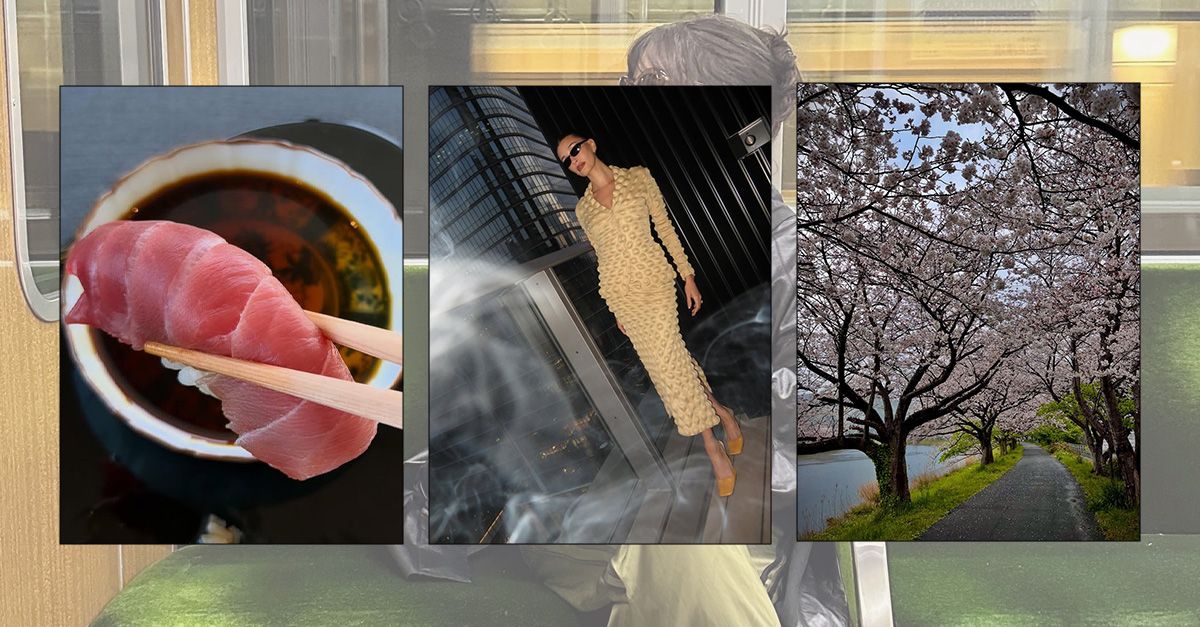
Welcome to Who What Wear Travels, a series of curated guides to destinations the fashion set loves. Consider this your download on everything from the chicest stays to the most memorable meals to the perfect travel wardrobe, all vetted by stylish locals and well-traveled fashion folks.
Of all the places that linger on our travel bucket lists, Tokyo continues to reign supreme. There are simply few places that are as universally beloved. Just ask anyone who’s recently returned, and the answer will almost always be a passionate one—be it the foodies, vintage-fashion lovers, culture enthusiasts, or anyone in between. The thing about Tokyo, as we’ve come to learn from our own trips, is that as soon as you mention you’re heading there, people tend to flood you with their emphatic recommendations. Everyone has a strong opinion. It’s a result of how unending the city is (the size of 37 Manhattans!), which means that no two trips are ever truly alike.
There’s never a wrong time to discuss a trip to Tokyo, but as the hype only continues to grow among American travelers, we felt it necessary that we deliver our comprehensive but inexhaustive Who What Wear travel guide to the city. With input from fashion friends—including Elie Inoue, a Japan-born, Paris-based fashion journalist; Diana Tsui, a Substack writer and the head of digital at 10 Magazine U.S.; and accessories designer and Tokyo expat Poppy Lissiman—and, of course, yours truly, consider this your ultimate download on where to stay, dine, shop, and go in Tokyo, all filtered through a fashion-person POV.
Article continues below

When to Visit
The spring is unquestionably considered peak season when the cherry blossoms bloom, but Inoue says she actually prefers the fall, especially October to November. “Unlike Europe or U.S. where the fall can be quite rainy, Japan often enjoys clear skies and mild weather during this time,” she explains. “Above all, the scenery transforms into stunning shades of red and yellow, with autumn foliage and golden ginkgo trees creating an especially beautiful landscape.” The weather tends to be the most enjoyable and ideal for sightseeing and walking around in both the spring and fall. The only time to avoid? July and August if you can manage to, Tsui says, because the heat and humidity can be stifling and make it much more difficult to explore the city on foot.
Where to Spend Time
For first-timers, Tsui suggests that Shibuya, Shinjuku, and Ginza are always safe bets—as are Roppongi and Toranomon. “The bulk of your most well-known hotels are in these areas, with Roppongi, Ginza, and Toranomon skewing more luxury while Shibuya and Shinjuku offer more affordable stays,” she notes. “As far as exploring goes, Shimokitazawa, Koenji, and Nakameguro are also extremely fun to shop around in, especially if you’re looking for more traditional vintage like denim or deadstock Calvin Klein, Ralph Lauren, Burberry, etc.”
If you want to scratch the surface even further, Inoue says that Yoyogi-Uehara and Yoyogi-Hachiman are among her favorite areas. “It’s a neighborhood that’s popular among locals to live in, and it’s full of small, unique shops tucked away throughout the area,” she explains. “Shimokitazawa has long been popular as a neighborhood for vintage shopping and experiencing local life, but in recent years, more in-the-know travelers have started gravitating toward Koenji. I have a feeling that Kamata might be the next area to gain attention.”
Where to Stay in Tokyo

(Image credit: Aman)
Hailey Bieber. Kim Kardashian. Rosie Huntington-Whiteley. There are few hotels worldwide that are steeped in as much celebrity glamour as Aman Tokyo is. Its arrival marked the hospitality label’s first urban location, and as such, it blends a Japanese-inspired aesthetic with the ultra-luxe minimalist design Aman has become known for. Occupying the top floors of the Otemachi Tower in Tokyo’s financial district, the sleek and expansive rooms offer dramatic high-floor views, but it’s perhaps the sprawling, multifloor spa that remains the hotel’s biggest draw.

Ranked as the best hotel in Japan and number 15 on the World’s 50 Best Hotels list, the Bulgari Hotel Tokyo lives up to its luxury reputation in every way. Despite being situated in the heart of the capital mere steps from Daimaru Tokyo and Tokyo Station, the space is defined by its unrivaled exclusivity, privacy, and intimacy, making it a true urban oasis. As for the design, the hotel fuses a sophisticated blend of contemporary Italian design with touches of Japanese tradition, bringing together the rich history of Bulgari’s house codes with local artisans and culture.

(Image credit: Trunk Hotel)
If you want to be immersed in the heart of Shibuya’s shopping district, fashion people all recommend Trunk. “A boutique hotel that embodies the spirit of modern Tokyo” is how Inoue describes the community-focused spot that’s situated right on Cat Street. “I had the opportunity to visit during a fashion-related event, and it truly felt like a place where you can experience the city’s creative energy. In contrast to another favorite spot of mine, Hoshinoya Tokyo, which reflects a more authentic and traditional Japanese aesthetic, Trunk offers a more casual, contemporary appeal,” she says.
WWW Travels tip: Most bars don’t open until 7 p.m., so Tsui advises popping into any of the luxury hotels for a drink when you need to rest in the early evening after a full day of exploring.
Where to Dine in Tokyo

(Image credit: Elie Inoue)
Tempura Tengi
“A long-established tempura restaurant in Kamata founded in 1969,” Tempura Tengi is at the very top of the list of traditional Japanese dining for Inoue. “The 82-year-old owner, who trained at high-end tempura restaurants in Ginza, serves exceptional tempura for around ¥2000—an incredible value considering his background,” she notes. “With only about eight counter seats, the space feels intimate and hidden away. The interior, with its unpolished, timeworn character, carries a sense of history that adds to its unique charm.”
WWW Travels tip: “Tipping is not expected in Japan,” notes Inoue. “Instead, people often express gratitude through small gestures, such as offering sweets, drinks, or a handwritten note. Bringing a small gift from your home country can be a thoughtful way to show appreciation.”

Fans of Quentin Tarantino will recognize Gonpachi Nishi-Azabu. That fight scene from Kill Bill (2003) was shot inside the famous izakaya. Housed inside a sprawling two-floor space, its all-wooden interiors feature bamboo, lanterns, Japanese roofs, and taiko drums. It is an especially fun spot for bigger groups, as the menu is a collection of smaller plates designed to be shared and, of course, because of the live music element.

“Omakase options abound in Tokyo, but Kyubey is a classic with a history of being beloved by politicians the world over. Obama was a frequent patron,” says Tsui. “Located in Ginza right around the corner from Dover Street Market, reservations are required if you want to sit at the sushi counter, but otherwise, you can roll the dice with walk-ins. Every bite is beautifully presented and as delicious as it looks. The choice of fish skews traditional with some surprises, like the baby eel appetizer that was a highlight.”
The Best Cafés in Tokyo

(Image credit: Elie Inoue)
Not just any café, this one is set in a traditional Japanese house and oozing with original architecture and charm. “The space feels cozy and intimate,” Inoue describes. “[It’s] almost as if you’ve been invited into your grandmother’s home while quietly reflecting a refined Japanese aesthetic.” Here, you can enjoy carefully hand-dripped specialty coffee in a truly serene atmosphere.
WWW Travels tip: Tabelog will be your best bet for restaurant recommendations, according to Tsui: “Anything above 3.2 stars will mean it’s the best meal you’ve ever had.”

Should you be near Shibuya Scramble Crossing and find yourself needing a pick-me-up, Tsui advises wandering over to Shibuya Hikarie ShinQs for Satei Zenkashoin, a cute café located within the department store. “With a rotating seasonal menu, every combo offers a tea and a dessert with flavors like red bean, black sesame, matcha, and more. People come here to chat and linger, so sit and enjoy your snack,” she says.

“First opened in 1948, this coffee house is a classic kissaten in Ginza,” Tsui shares. “Yes, there will be lines, but they move quickly. Inside, the intimate space is still making drinks like they’ve done for the last 70-plus years—no scales or fancy devices here. Two standouts include the Queen Amber, made with cold black coffee and sweet milk froth served in a coupe, as well as their egg coffee.”
The Best Vintage Shopping in Tokyo

“Already a well-known destination, QOO in Aoyama may be familiar to many,” admits Inoue. “It was here that I finally found the vintage bag I had been searching for within my budget.”

“Vintage QOO, Casanova, and Amore are among the places to go and find yourself a designer bag, but should they not have what you want, another spot to check out is Komehyo,” says Tsui. Per her recommendation, I checked out the local chain’s larger location in Shibuya and was not disappointed. “From Louis Vuitton to Dior, you’ll find both runway styles as well as more commercial options spanning ready-to-wear and accessories. There’s also an entire floor devoted to jewelry from the likes of Bulgari, Tiffany & Co., Cartier, Chrome Hearts, and more.” I, for one, beelined to the impressive rack of Pleats Please pieces and also found myself trying on several of the store’s vast array of designer cocktail watches.

“For more affordable vintage and non-designer pieces, I love Toro Vintage in Jingumae. The whole fit-out and edit is very Bode adjacent,” Lissiman shares.
What to See in Tokyo

(Image credit: Elie Inoue)
Culture lovers have no shortage of architectural gems to choose in Tokyo, but take Inoue’s word for it and add Enoura Observatory to your itinerary. “A monumental art and architectural complex designed by contemporary artist Hiroshi Sugimoto perched on a hill overlooking Sagami Bay, the site brings together galleries, a glass stage, and a tea house, all carefully positioned in alignment with the movement of the sun,” she explains, “particularly the summer and winter solstices.” It takes about an hour and a half to reach from the city center, but Inoue insists that it’s truly worth the trek.
WWW Travels tip: Cash is still necessary, Tsui informs, especially if you want street food or are shopping from smaller or more traditional vendors.

(Image credit: Elie Inuoue)
“Japan has a unique cultural institution known as jazz kissa—spaces dedicated to deeply listening to music in an intimate setting,” informs Inoue. Her favorite is Little Soul Cafe in Shimokitazawa. “Opened in 1999, this music bar houses an impressive collection of 15,000 vinyl records lining its walls, offering a rich and immersive listening experience.”

Bathing is a near-sacred ritual for the Japanese and for a deeper understanding, Inoue highly recommends watching the comedy film Yudo: The Way of the Bath. “Sento—traditional public bathhouses,” she explains, “are part of a long-standing cultural practice that continues today. Bathing is done nude and in gender-separated spaces, which may feel unfamiliar or even challenging for Western visitors. That said, it’s an experience I never miss whenever I stay in Japan.”
What to Pack for Tokyo

As much as Tokyo is a major city where technically anything goes, let’s face it: It’s also one of the most elite fashion capitals where the concentration of style per square foot runs high. Overall, the locals in Tokyo prioritize looking put-together and polished, and we’ve noticed that most women still opt for pants and long skirts even when we visited in the dense heat of August.
Practically speaking, there are a number of packing rules that we quickly learned can make or break the Tokyo experience. Comfortable shoes are the most important item to bring. Trust us—20,000-step days are the norm. “I lived in my Cecilie Bahnsen x Adidas as well as my Nike Muse Sneakers when I was there, but I also love a ballet-flat Tabi or loafers as well,” Tsui informs. Think cool sneakers and chic flats that are ideally tried and tested for comfort in your closet already. If you’re traveling when it’s warm (from April through September), she also recommends light-colored tanks and breezy tops to combat the humidity. Our editor adds that she lived in capri leggings (comfortable but stylish) and an A-line poplin skirt (airy and polished) when she was there.
Inoue mentions that socks are a key item to bring in your purse if you’re not wearing them already because you’ll often need to take off your shoes at restaurants, temples, and other places. “Also, you really don’t need to bring pajamas—most hotels offer them,” Tsui adds.

Celine
Square in Silk Twill

Pleats Please
Mellow Pleated Top

Celine
Boyfriend Jeans 001


Khaite x OP
Mask-Frame Sunglasses

The Frankie Shop
Elva Trench Coat

The Park
Annie Jersey Maxi Dress

Maison Margiela
Tabi Ballet Flats
Explore More:
Read the original article here