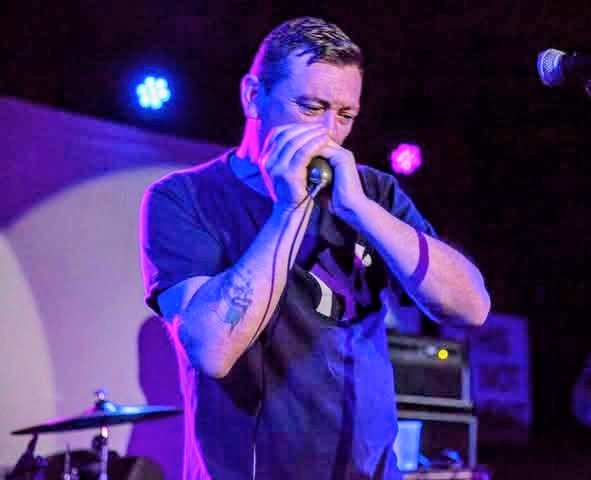
Ask Paddy Smith who shaped him and the first names are the ones you would expect from a harmonica player. Muddy Waters. Paul Butterfield. Rory Gallagher. Then the list takes a turn. Joe Strummer. Shane MacGowan. Stiff Little Fingers. The Undertones. Those are not blues names. They are the sound of safety pins, sweat and three chords played as fast as the drummer could stand. Put the two halves of that list together and you have the key to the Navan man’s music, and to his album Could Have Found Grace, out now on Tribeca Records.
On the surface the blues and punk look like opposites. One is patient and old, the other impatient and young. Underneath they are close relations. Both were made by people with little money and plenty to say. Both run on a handful of chords and distrust anything fancy. Both hold that feeling counts for more than polish, and that a singer who means it will always beat a singer who is merely good. Punk did not reject the blues. It stripped the blues back down to its frame and plugged it in again.

History bears that out. The British and Irish pub bands of the mid-1970s played hard, fast rhythm and blues, often with a harmonica out front, and punk walked straight through the door they opened. Strummer himself came up in exactly that kind of band before The Clash. In the north of Ireland, Stiff Little Fingers and The Undertones were proving that a few kids with cheap guitars could say something true about where they lived. Further south, Phil Lynott and Rory Gallagher had already shown that Irish musicians could take American forms and make them their own. Smith draws on every one of those lines.
You can hear it in the way he uses the harmonica. In polite hands the harp is a sweetener, a little color between verses. In Smith’s hands it is a weapon. It snarls and pushes and gets in the listener’s face. One review of the album called the collection gritty and in-your-face, which is as fair a description of a punk record as of a blues one. He does not play the instrument to decorate a song. He plays it to drive the point home.
You can hear it in the songs as well. The record runs roughly half an hour, which is a punk running time. Nothing overstays its welcome. “Still Standing Tall” finds the singer at a crossroads, shrugging off every name he has been called, a cheap cigarette in hand. That is the oldest image in the blues, the crossroads, delivered with the defiance of a man who learned his attitude from The Clash. Elsewhere there are titles like “Rebel Blues” and “One Dollar Beer,” and they tell you where the sympathies lie. These are songs about ordinary life, sung from the cheap seats.
Even the way the album was made owes something to the punk ethic. Smith and guitarist Danny Tobin of The Business Blues Band worked through the material together over three intense days, line by line and chord by chord. “The process was completely organic, nothing felt forced,” Smith has said. No months of second-guessing, no layers of studio gloss. They trusted the songs and got them down, with Ivan Jackman producing at Hellfire Studios in Dublin.
The band is far from a garage outfit. Aongus Ralston of The Waterboys plays bass, Jason Duffy of The Corrs is on drums, and the keyboards are handled by James Delaney, who has worked with Van Morrison, Rory Gallagher and Chuck Berry. That is serious musicianship, and it gives the record its swing and its weight. What keeps it from ever sounding comfortable is the man at the microphone, who sings and blows as though the last bus is leaving.

There are bluesmen who treat the music as a museum piece, something to be preserved carefully and played correctly. Paddy Smith is not one of them. He plays the blues the way the punks played rock and roll, as something urgent that belongs to whoever needs it most. It is the oldest music he knows, and in his hands it still sounds like a fight worth having.
Could Have Found Grace is streaming worldwide now via Tribeca Records at found.ee/paddysmith_couldhavefoundgrace-1