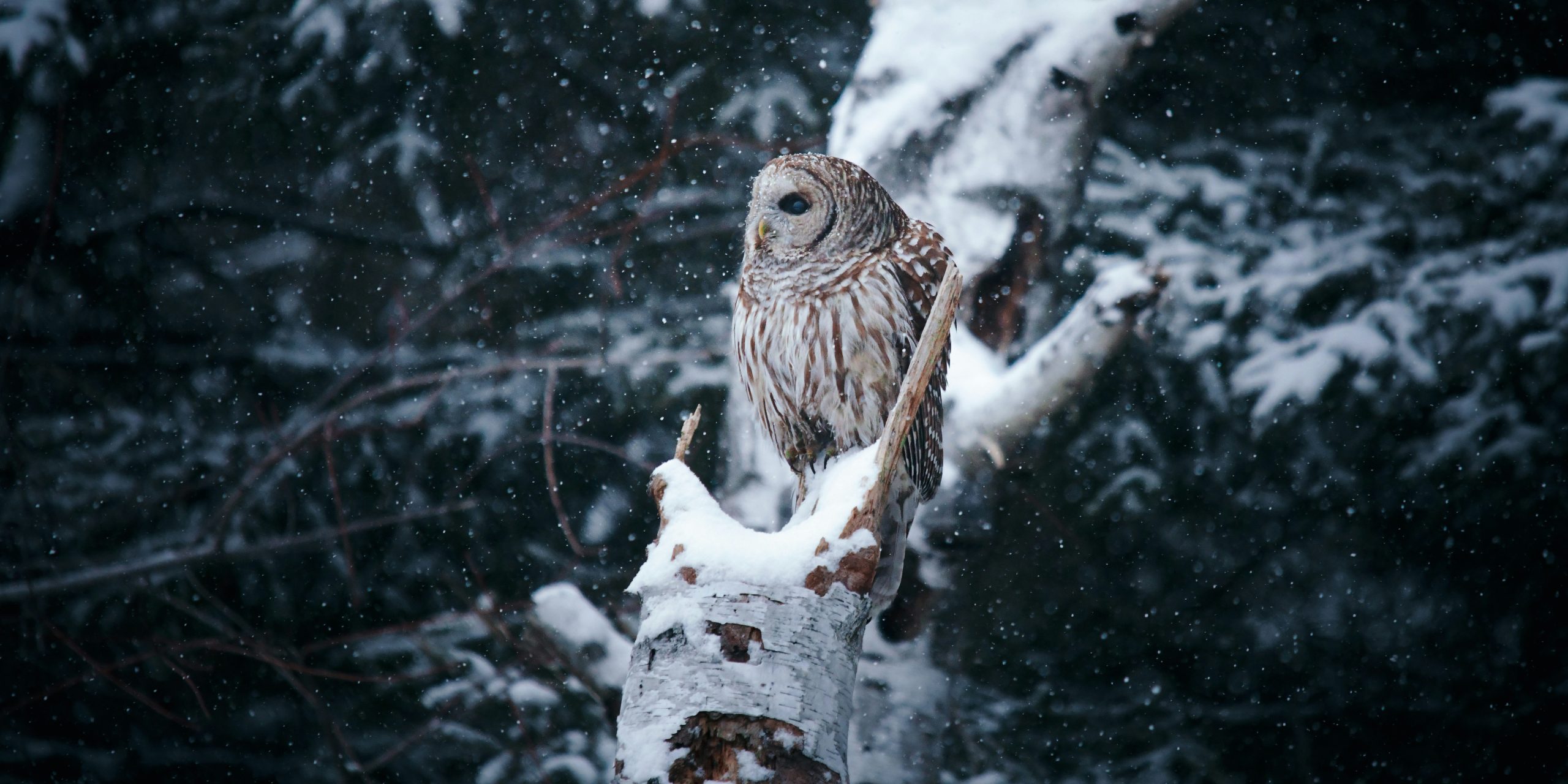
A Frozen Bird Too Beautiful to Bury
Our Bodies Are Owl Bodies
My mother was walking in a storm when she saw it face-up in the snow. She knelt down. It wasn’t breathing. She gathered it close.
Saw-whet owls are among the smallest North American species, often in danger of being hunted by larger owls. Their eyes are like pooled oil coiled with gold.
In the years between rehab, my mother’s walking became a necessary ritual. Winter walking was preferred. Freezing weather was a balm.
It’s not clear what to do with a dead owl. She called the Audubon to ask if they might stuff it for educational use. They told her: As a protected species, no taxidermist would touch it.
The owl genus Aegolius includes saw-whets. The name is from the ancient Greek for bird of ill omen. She wrapped it in cloth & placed it in the freezer. Too beautiful to bury, for years it rested beside ice cream & frozen meat. She had theories about the power of cold.
A decade later she was once more out of rehab. It didn’t take. The phone rang & she could barely speak. Hot summers stretched on. She moved north after the divorce. When I went to help clean out her things I remembered the owl, unwrapped the cloth & held it in my hands, soft & cold. Like holding snow.
She was never again all right. Alone at her place, neighbors often found her senseless on the lawn, sprawled drunk on the driveway. Cicadas buzzed in July sun. Forget this.
See her this way: silent beneath trees in the storm, feathered bundle in her arms, her mittens dusted with ice. See her like this only: one body sheltering another.
Sparrows
At least as old as the pyramids, their name even appears in hieroglyphics, but rarely & with bad connotations. This according to the placard next to a limestone fragment in the museum where we’ve brought our kids, friends in the same grade.
I lean in to study etches of common bird-shape: triangle beak & stick-feet. If I hadn’t just read it, I wouldn’t have known it was a sparrow. I didn’t know they live on every continent except Antarctica. You don’t yet know cancer is nesting behind your eyes.
A sarcophagus shimmers in a glass case nearby, flash & color ring the edges. Another placard says Egyptians believed remembering a name after death ensured safe passage to the afterlife.
In three years you’ll text to say you have four months, maybe five. You’re younger than I am. One day you’ll stop responding to my emails & soon after your wife will send your obituary.
I read once about an ornithologist who listened for sparrow song in old movies to track their historical ubiquity. In Latin they are Passer domesticus. I’ll never forget that name, or yours & I’m grateful they’ve survived while other kingdoms fall.
More placards, but the kids flit to the next display before we have a chance to read. There’s so much I don’t know, you say, moving ahead. All the names, I wish I had a hundred lifetimes.
The light here is feathered gold. Our children call to us from around a corner. Bright spots glint our faces. Everywhere there are jewels.
Maine Coast, 1983
Late May or early June, wind & salt strata on the beach my father took me to when things were hard at home. Hard enough to make the ocean, biggest thing there is, feel so small, so close & like my father owned it when he looked to the sky, said the names of cloud-shapes pulling in & wished aloud he’d brought our coats. Just the two of us alone. No one else out that early, but early’s when my mother drank
away disquiet & it was best for us to leave her. There was a seal pup. We saw it by the rocks, white against the gray, gathering its own round light that put the beach in shadow. My father noticed first, stopped & knelt & put his hand to me to say: Look. Was that when I learned beauty? Or pity, or sorrow, or any on the list ofwhat arises near a helpless soul alone? Fear I knew already & saw it flash inside the seal’s dark eyes as rain loomed behind. Then once more the wind. The pup got spooked & rolled to the waves, became a hidden thing the ocean held. For memory, for safe keeping. For me & for my father as we turned & left, walked the way we’d come. Back to the car, the coming storm.
Read the original article here