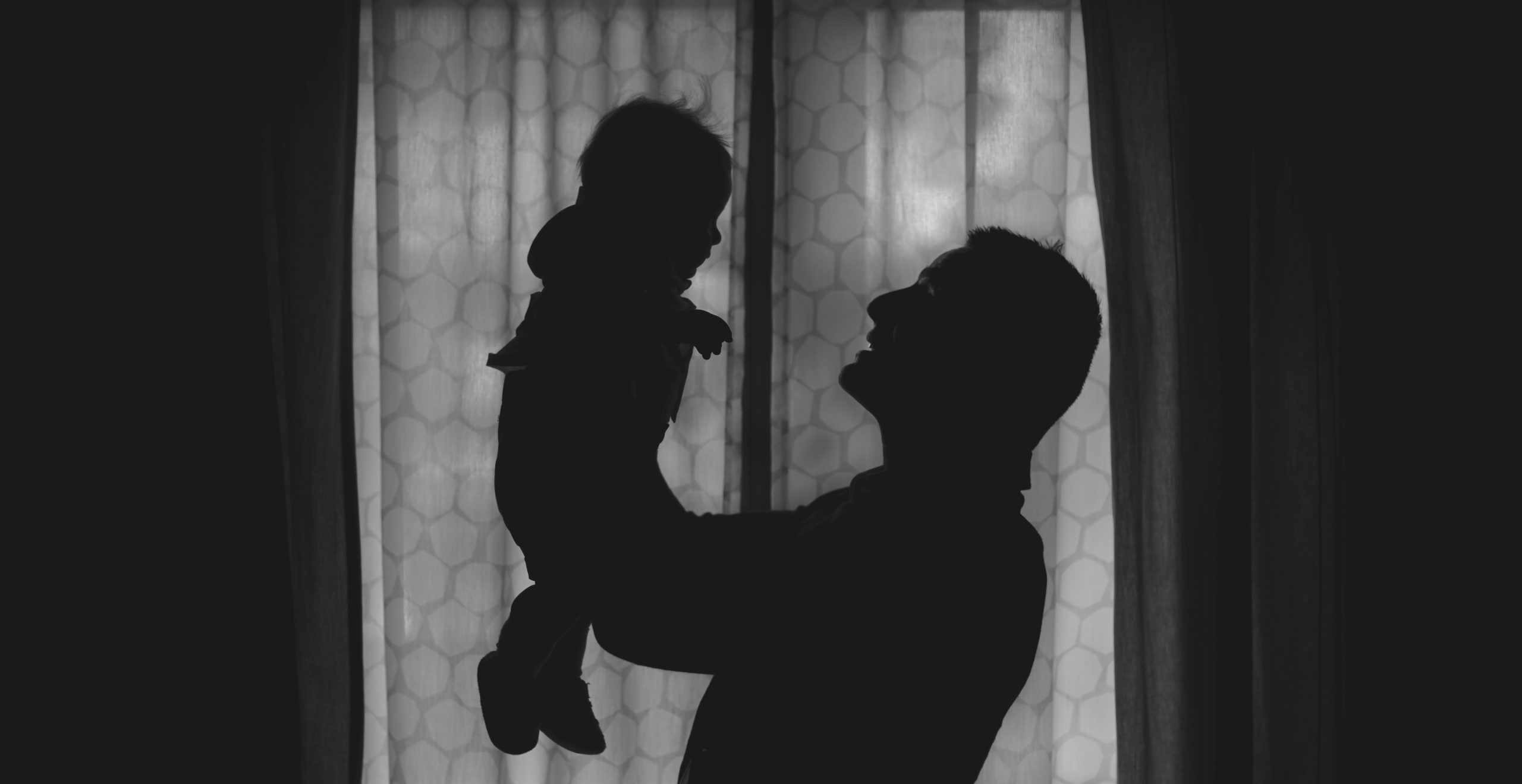
I Cannot Make My Son Purer Than This Sickening World
“Everything” by Ingeborg Bachmann, translated by Philip Boehm and Tess Lewis
When we sit down to eat like two people turned to stone or when we meet at the door to the apartment in the evening because we both thought to lock it at the same time, I feel our grief stretching like a bow from one end of the world to the other—in other words, from Hanna to myself—a bow that is drawn and fitted with an arrow that must fly straight to the heart of the unmoved heavens. When we walk back through the front hall she’s two steps ahead of me, she goes into the bedroom without saying “Good night” and I flee to my room, to my desk, where I stare into space, her lowered head before my eyes and her silence in my ears. Is she lying down and trying to sleep or is she awake and waiting? What for?—since she isn’t waiting for me!
When I married Hanna it was less about her than because she was pregnant. I didn’t have a choice, I didn’t have to make a decision. I was moved because something new was coming into being, something that came from us, and because I felt the world was waxing. Like the moon, when it appears new and tender with a wisp of color at the start of its course and it is customary to bow three times. I experienced moments of absentmindedness I hadn’t known before. Even in the office—although I had more than enough to do—or during a conference I was suddenly transported into a state where I was focused solely on the child, this unknown, unreal being, heading toward him with all my thoughts, all the way to the warm, lightless womb where he lay confined.
The child we were expecting changed us. We hardly went out anymore, and neglected our friends; we found a bigger apartment, furnished it better, and ensconced ourselves more permanently. But everything began to change on account of the child I was waiting for: I stumbled on thoughts the way you stumble onto a mine, unexpectedly—thoughts of such explosive power that they should have made me recoil, but I went on, with no sense of the danger.
Hanna misunderstood me. Because I couldn’t decide whether the stroller should have big or small wheels, I appeared to be indifferent. (I really don’t know. Whatever you think. Yes, I’m listening.) When I stood there idly in the stores where she was picking out bonnets, jackets, and diapers, hesitating between pink and blue, synthetic wool and real wool, she accused me of being distracted, of not being engaged. But I was engaged, and far too much.
How can I possibly express what was going on inside me? I felt like a wild man who suddenly discovers that the world in which he moves—between firepit and campsite, between sunrise and sunset, between hunting and eating—is also the world that is millions of years old and that will disappear, that its place is insignificant among many solar systems, that it is spinning around itself and orbiting the sun at great speed. All of a sudden I saw myself in other contexts, myself and the child, who at a particular time in early or mid-November was supposed to begin his turn at life, exactly as I once had, as had everyone before me.
It just has to be properly visualized. This whole lineage! Like picturing black and white sheep before you fall asleep (a black one, a white one, a black one, a white one, and so on)—sometimes this can make you dull and drowsy but at other times it can keep you desperately awake. This formula for falling asleep has never worked for me, although Hanna, who learned it from her mother, swears that it’s more relaxing than a sleeping pill. Perhaps many find it relaxing to think about this series: And Shem begat Arphaxad. And Arphaxad lived five-and-thirty years, and begat Salah. And Salah begat Eber. And Eber begat Peleg. And Peleg lived thirty years, and begat Reu, and Reu begat Serug, and Serug begat Nahor, and later each begat many additional sons and daughters, and the sons kept begetting sons, namely Nahor begat Terah and Terah begat Abram, Nahor, and Haran. I tried a few times to think through the entire lineage, not only forward but also backward, all the way to Adam and Eve, from whom we are unlikely descended, or to the hominids, who may be our forebears, but in each case the chain gets lost in obscurity, and so it doesn’t matter whether you cling to Adam and Eve or to some other pair. However, if you prefer not to cling at all and instead ask to what end each of them was given their turn, then this whole chain doesn’t make any sense and you have no idea what to make of all the begettings or the first and last lives. Because each person gets only one turn for the game that he stumbles upon and is called on to understand: procreation and upbringing, economics and politics, and he is allowed to busy himself with money and feelings, with work and invention and the justification of the rules of the game called thinking.
But we probably just have to come to terms with the fact that we keep multiplying with such confidence. The game needs players. (Or do the players need the game?) I, too, had been placed in the world with such confidence, and now I had placed a child in the world.
And now the thought was making me shiver.
I started seeing everything in relation to the child. My hands, for example, that were destined to touch and hold it, our fourth-floor apartment on Kandlgasse, the Seventh District, the streets that crisscrossed the city down to the Prater meadows, and finally the entire overcrowded world that I would teach him about. The child should hear the names from me: table and bed, nose and foot. Also words such as: spirit and God and soul, useless words in my opinion, but you can’t exactly hide them, and later on, words as complicated as: resonance, diapositive, chiliasm, and astronautics. I would need to make sure my child finds out what everything means and what everything is used for, a door handle and a motorcycle, a mouthwash and a questionnaire. My head was spinning.
Of course, when the child came I had no use for big lessons. There he was, wrinkled, jaundiced, pitiful, and there was one thing I wasn’t prepared for—that I had to give him a name. Hanna and I hastily came to an agreement, and we had three names entered in the register: my father’s, her father’s, and my grandfather’s. But we didn’t end up using any of these names. By the end of the first week his name was Fipps. I don’t know how that was decided. It might have been partly my fault, because, along with Hanna, who was inexhaustible when it came to inventing and mixing nonsensical syllables, I tried calling him nicknames—his actual names were clearly not suitable for this tiny naked creature. After all our fawning, Fipps was the name that emerged, which has irritated me more and more with every passing year. At times I even blamed the child, as if he could have defended himself, as if it hadn’t all happened by chance. Fipps! I’ll have to keep calling him that, and so make him seem ridiculous even beyond the grave, and us as well.
When Fipps lay awake or asleep in his blue-and-white crib, when I was only good for wiping some spittle or sourish milk from his mouth or for picking him up when he started crying, hoping to provide some relief, it first occurred to me that he, too, had plans for me, but that he was giving me time to figure it out, that he absolutely wanted to give me time, like a specter that appears to someone before withdrawing into the darkness, then reappears with the same indecipherable expression. I often sat next to his bed, looking down on that face that seemed so impassive and into those eyes that gazed in no direction, studying his features like a script that had been handed down with no key to decipher its meaning. I was happy to see how steadfastly Hanna tended to the obvious matters, nursing him, putting him to sleep, waking him up, transferring him, and changing his diaper as prescribed. She cleaned his nose with little cotton swabs and dusted between his chubby thighs with a cloud of powder, as though doing so would bring everlasting benefit to him as well as to her.
After a few weeks she tried to coax a first smile out of him. But when he actually surprised us with one, it struck me as more of an enigmatic grimace that had nothing to do with us. Even when he focused his gaze on us more and more clearly and often, or stretched out his little arms, I suspected that it didn’t mean anything and that we were just looking to ascribe motives he would adopt at some later point. Hanna would not have understood me—possibly no one would have—but it was around this time that my anxiety began. I fear that back then I had already started to distance myself from Hanna, to shut her out increasingly often and keep her away from my true thoughts. I discovered a weakness in myself—it was the child who led me to this discovery—as well as the feeling that I was headed for some defeat. I was thirty years old, just like Hanna, who looked young and tender like never before. But the child had not made me any younger. To the same degree as he was expanding his circle, I was shrinking my own. With every smile, with every joyful cheer, with every cry I hit a wall. I didn’t have the strength to stifle these smiles, this chirping, these screams. Because that’s what it would have taken!
The time I had left passed quickly. Fipps sat upright in his stroller, his first teeth came in, he bawled a lot; soon he stretched and stood up, wobbling at first but then clearly steadier, he scooted through the room on hands and knees, and one day uttered his first words. There was no stopping it now, and I still didn’t know what to do.
What indeed? I had earlier thought that I needed to teach him about the world. But our mute conversations had driven me crazy and taught me otherwise. Wasn’t it within my power to withhold the naming of things, for example, or to refrain from teaching him the use of objects? He was the first human being. Everything began with him, and who was to say that everything couldn’t be completely different because of him? Shouldn’t I leave him a world that was blank and without meaning? After all, I didn’t need to initiate him into purposes and goals, or into good and evil, or into what really is and what only seems to be. Why should I draw him close to me, force him to know and believe and feel joy and sorrow! Here, where we are standing, the world is the worst of all worlds, and no one has understood it to this day, but where he was standing, nothing had been decided. Nothing yet. But for how long?
And I suddenly knew: it’s all a question of language—and not just this German language that was created along with the others in Babel to confound the world. Because another language exists, smoldering beneath this one, a language that extends to gestures and facial expressions, to the unspooling of thoughts and the course of emotions, and within it lies our entire misfortune. It was all a question of whether I could protect the child from our language until he had established a new one and could usher in a new age.
I often took Fipps out of the house by myself, and when I saw the effects of what Hanna was doing to him—the coddling and caressing, the coquettish teasing, and the little games—I was horrified. He was taking after us. But not just after Hanna and me, no, after people in general. However, there were moments in which he governed himself, and then I observed him urgently. All ways were the same to him. All beings were the same. Certainly the only reason Hanna and I were closer to him was because we were always busying ourselves nearby. It was the same to him. But for how long?
He was afraid. Not yet of an avalanche or some malevolent act, however, but of a leaf shaking on a tree. A butterfly. Flies terrified him. And I thought: how will he be able to live when an entire tree starts bending in the wind and I withhold so much from him!
He encountered a neighbor’s child on the stairs and clumsily grabbed at his face, then shrank back; perhaps he didn’t realize it was a child. In the past he had screamed when he felt bad, but now his screams were about something else, something more. It often happened before bed or when he was picked up and brought to the table, or when a toy was taken away. He had a great rage inside him. He could lie down on the floor, claw his fingers into the carpet, and scream until he was blue in the face and frothing at the mouth. He would cry out in his sleep as if a vampire had settled on his chest. These screams reinforced my opinion that he was still willing to scream and that his screams were effective.
Oh one day!
Hanna responded with tender reproaches and called him naughty. She hugged and kissed him or looked at him earnestly and told him not to hurt his mother’s feelings. She was a marvelous temptress. She would lean out over the nameless river, patient and persistent, endeavoring to lure him across, while pacing back and forth on the bank and enticing him with chocolate and oranges, spinning tops and teddy bears.
And when the trees cast shadows I believed I heard a voice: Teach him the language of shadows. The world is an experiment, and it is enough that this experiment has always been repeated in the same way with the same result. So try a different experiment! Leave him to the shadows! Up to now the result has been: a life mired in guilt, love, and despair. (Since I had begun to think of everything in abstractions, words like these came to me.) But it was possible for me to spare him guilt and love and every disaster, and free him for a different life.
But it was possible for me to spare him guilt and love and every disaster, and free him for a different life.
Yes, on Sundays I took him strolling through the Vienna Woods, and when we came to some water a voice inside me said: Teach him the language of water! The path led over stones. Over roots. Teach him the language of stones! Root him anew! The leaves were falling: once again it was autumn. Teach him the language of leaves!
But because I didn’t know and couldn’t find any word from these languages, since I only had my own language and could not venture beyond its boundaries, I carried him in silence up and down the paths and then back home, where he learned to form sentences and fell into the trap. He was already expressing wishes, requesting things, giving commands, or talking for the sake of talking. On later Sunday strolls he plucked blades of grass, picked up worms, caught beetles. Now they were no longer all the same to him, he inspected each one and killed it if I didn’t take them out of his hand in time. At home he tore apart books and boxes and broke his jumping jack toy. He grabbed everything, bit into everything, fingered everything and either cast it aside or accepted it! Oh one day. One day he will understand.
During this time Hanna was still more communicative, she would often call my attention to something Fipps said; she was enchanted by his innocent looks, by his innocent talk, and by whatever he was doing. But I couldn’t see any innocence in the child, since he was no longer defenseless and mute as he’d been in the first weeks. And even then he probably wasn’t so much innocent as simply incapable of expressing anything, a bundle of fine flesh and flax, with a weak breath, a huge dull head that took the edge off whatever message the world was sending like a lightning rod.
When he was older, Fipps was frequently allowed to play with other children in a cul-de-sac next to our building. Once, around noon, when I was on my way home, I saw him and three other little boys using a tin can to collect water that was running down the curb. Then they stood in a circle, talking. It looked like they were having a conference. (The way engineers confer to determine where to begin drilling, where to place the pilot hole.) They squatted on the sidewalk, and Fipps, who was holding the can, was about to empty it out when they got back up and moved three pavement stones farther away. But this place wasn’t suitable for their plans either. They stood up again. There was tension in the air. What masculine tension! Something had to happen! And then, a meter farther on, they found the place. They squatted back down, stopped talking, and Fipps tipped the can. The dirty water flowed over the pavement. They watched, silently and solemnly. It was done, finished. Perhaps they had succeeded. Surely they succeeded. The world could count on these little men who were helping it advance. They would help it advance, I was now absolutely sure of it. I went inside, climbed up the stairs, and threw myself onto the bed in our room. The world had been advanced, the place had been found from which they could move it forward, always in the same direction. I had hoped that my child would not find the direction. And once, a long time ago, I was afraid he might not find his way. Fool that I was, I had feared he wouldn’t find the direction!
I got up and splashed a few handfuls of cold water on my face. I no longer wanted this child. I hated him because he understood all too well, because I could already see him treading in everyone’s footsteps.
I went around extending my hatred to everything invented by people, the streetcar lines, the house numbers, the property deeds, time management, this whole elaborate tangled clutter that calls itself order, also garbage removal, course catalogs, registry offices, all these pitiful institutions you can no longer fight against, that no one fights against, these altars on which I’d made sacrifices but wasn’t willing to sacrifice my child. How had my child come to this? He hadn’t created the world, had not caused its damage. Why should he set himself up in it! I screamed at the residential registry office and at the schools and at the barracks: Give him a chance! Give my child a single chance before he goes to ruin. I was furious with myself, because I’d forced my son into this world and had done nothing to free him. I owed it to him, I had to act, to go away with him, to escape to some island. But where is this island? Where can a new human being establish a new world? I was trapped, together with my child, and condemned in advance to take part in the old world. And so I gave up on him. I gave up loving him. This child was capable of everything—everything except escaping and breaking this vicious cycle.
Fipps spent the years before he went to school playing games. He played his days away in the truest sense of the word. I didn’t begrudge him playing, but I objected to these games, which led him to games he played later. Hide-and-seek, eeny meeny miny moe, cops and robbers. I wanted him to have completely different, pure games, other fairy tales than the established ones. But nothing occurred to me, and he was only interested in copying others. People find it impossible to believe, but there’s no way out for the likes of us. Time and again, everything is divided into top and bottom, good and evil, light and dark, quantity and quality, friend and foe, and whenever other beings or animals appear in fables, they immediately take on human features.
Because I no longer knew how and to what end I should educate him, I gave up. Hanna noted that I no longer looked after him. Once we tried talking about it, and she stared at me as though I were some kind of monster. I couldn’t say everything I wanted to because she stood up, cut me off, and went to the child’s room. It was evening, and from then on she started praying with our child—she, who would have no more thought of praying than I would: Weary now I go to rest. Little Jesus, meek and mild. And so on. I didn’t actually pay much attention to it, but they probably developed quite an extensive repertoire. I believe she did that to protect him. She would have tried anything, a cross or a talisman, a magic incantation or something else. Basically she was right, since Fipps would soon fall in with the wolves and soon start howling with the wolves. “God be with you” was perhaps the last chance. Both of us were handing him over, each in our own way.
When Fipps came home from school with a bad grade, I didn’t say a word, but I also didn’t try to console him. Hanna secretly agonized over this. She regularly sat down with him after lunch and helped him with his homework, quizzing him—and she did this as well as humanly possible. But I didn’t believe in the cause. I didn’t care if Fipps was admitted to high school or not, if something became of him or not. A worker would like to see his son become a doctor, while a doctor pictures his son becoming at least a doctor. I don’t understand this. I didn’t wish for Fipps to be either smarter or better than us. Nor did I want to be loved by him; he didn’t have to obey me or comply with my wishes. No, I wanted . . . I wanted him to start from scratch, to show me with a single gesture that he didn’t have to reproduce the gestures we made. But I didn’t see any. I was born anew but he was not! It was me, I was the first human—I lost everything, and did nothing!
I wished nothing for Fipps, absolutely nothing. I just continued to observe him. I don’t know if a man is permitted to observe his own child that way. Like a researcher observing a “case.” I carefully watched this helpless human case. This child whom I couldn’t love as I loved Hanna. Hanna, whom I never completely dropped, because she couldn’t disappoint me. When we first met, I saw that we were the same type of person, and she was shapely, experienced, somewhat special but not too special, a woman and then my wife. I was putting this child and myself on trial—him because he was thwarting the highest expectations, and myself because I was unable to prepare the ground for him. Because he was a child, I had expected that this child—yes, I had expected that this child would redeem the world. This sounds monstrous. And I really did behave monstrously toward the child, but there was nothing monstrous about what I wanted. Just like everyone before me, I was simply not prepared for the child. I hadn’t been thinking at all when I was embracing Hanna, when I was finding solace in the darkness of her loins—I couldn’t think. It was good to marry Hanna, not only because of the child, but later I was never again happy with her, I was just anxious that she not have another. I suspect she wanted another child, though she no longer talks or does anything about it. It’s easy to imagine that now Hanna is thinking about a child all the more, but she is turned to stone. She doesn’t avoid me and doesn’t come close to me. She quarrels with me in a way no one should quarrel with another person, since no one is master over such incomprehensible things as death and life. Back then she would have happily raised an entire brood, and I prevented it. All the conditions were fine for her, and none were fine for me. Once, when we were arguing, she explained to me everything she wanted to do and everything she wanted to have for Fipps. Everything: a brighter room, more vitamins, a sailor suit, more love, all the love there was, she wanted to create a storehouse of love that would last a lifetime, because outside, because people . . . Provide a good education, foreign languages, nurture his talents. She cried and was annoyed because I laughed at that. I don’t believe she thought for a minute that Fipps might be one of the people “outside,” that like them he would be capable of hurting, insulting, cheating, killing, that he’d be capable of even a single vile act, whereas I had every reason to believe he would. Because what we call evil was lodged inside him like an abscess full of pus. Which is why I don’t even need to think about the business with the knife. It began much earlier, when he was three or four years old. I happened to arrive home when he was rampaging around, furious and bawling; a tower he’d built with blocks had fallen over. Suddenly he stopped his moaning and said quietly and emphatically: “I’m going to burn down your house. Make everything kaput. Make all of you kaput.” I lifted him up and set him on my knee, stroked him, promised to rebuild the tower. He repeated his threats. Then Hanna showed up, and for the first time she was uncertain. She reprimanded him and asked him who taught him to talk like that. He replied firmly: “Nobody.”
Next he shoved a little girl who lived in our building down the stairs, and afterward he seemed very upset, promising never to do it again, and yet it did happen one more time. For a while he kept hitting Hanna whenever he got the chance. That, too, passed.
Of course I’m forgetting to mention how many beautiful things he said, how affectionate he could be, how he woke up in the morning, warm and glowing. I noticed all that as well, and was often tempted to snatch him up in my arms and kiss him the way Hanna did, but I didn’t want to lull myself into some feeling of reassurance and then let myself be deceived. I was on the alert. Because there was nothing monstrous about what I wanted. I had no grandiose plans for my child, but I did wish for this little thing, this slight deviation. Of course, when a child is named Fipps . . . Was there any reason to expect him to live up to his name? Coming and going with a name more suited to a lapdog? Wasting eleven years in one circus act after the next? (Eat with your good hand. Walk straight. Wave. Don’t talk with your mouth full.)
I was often tempted to snatch him up in my arms and kiss him the way Hanna did, but I didn’t want to lull myself into some feeling of reassurance and then let myself be deceived.
After he started going to school, I soon found myself spending more time away than at home. I went to play chess in the café or locked myself in my room, reading while pretending to work. I met Betty, a salesgirl from Mariahilfer Strasse, brought her stockings, movie tickets, or something to eat; in this way we became familiar. She was brusque, undemanding, submissive, and passed her free evenings in a state of listlessness, except where her appetite was concerned. There was one year when I went to see her quite often; I would lie down beside her on the bed in her furnished room, where she read glossy magazines while I drank a glass of wine, and calmly listened to all my unreasonable demands. It was a time of the greatest confusion because of the child. I never slept with Betty, on the contrary, I was out for self-gratification, for that shady, frowned-upon liberation from womankind and from the human race. So I wouldn’t become ensnared, so I could be independent. I didn’t want to lie down with Hanna anymore, because I would have relented, I would have surrendered to her.
Although I made no attempt to disguise my evenings out for such a long time, I had the feeling that Hanna wasn’t harboring any suspicions. One day I discovered that was not the case; she had already seen me with Betty in the Elsahof Café, where we often met after the store closed, and then two days later, when I was standing in line with Betty for tickets at the Kosmos Cinema. Hanna acted very odd, looking past me as though I were a stranger; I didn’t know what to do. I lamely nodded to her, then moved up to the cashier while feeling Betty’s hand in my own, and—as incredible as it seems to me now—actually went into the cinema. After the show, as I was preparing myself for recriminations and rehearsing my defense, I took a short taxi ride home, as if that might allow me to repair or prevent something. Since Hanna didn’t say a word, I launched into my prepared speech. She maintained a stubborn silence as if I were talking about something that had nothing to do with her. Finally she opened her mouth, and said timidly that I ought to think of the child. “For the love of Fipps . . .”—she actually said this! I felt beaten on account of her embarrassment, begged for forgiveness, dropped to my knee, promised it would never happen again, and I really did never see Betty again. I don’t know why, but I wrote her two letters anyway, to which I’m sure she didn’t attach any importance. I never received an answer from Betty, nor was I expecting one. It was as if I’d wanted to send these letters to myself or Hanna, I had laid myself bare in them as never before to anyone else. At times I was afraid Betty might blackmail me. Why blackmail? I sent her money. But why, since Hanna knew about her?
This confusion. This desolation.
I felt extinguished as a man, impotent. I wanted to stay that way. If there were an accounting it would work out in my favor. Resign from the human race, come to an end, an end, let it just come to that!
But everything that happened wasn’t about me or Hanna or Fipps, but about father and son, guilt, and a death.
I once read a sentence in a book: “It is not Heaven’s way to raise its head.” It would be good if everyone knew about this sentence that speaks of Heaven’s rudeness, its bad behavior. No, it truly isn’t Heaven’s way to look down, to give signs to the confused people here below. At least not where such a dark drama is taking place, in which Heaven itself, this concocted Above, is playing a part. Father and son. That such a thing as a son can even exist—that’s what is incomprehensible. Such words now occur to me because there is no clear word for this obscure business; the more you think about it, the more you start losing your mind. It’s an obscure business, all right: because there was my semen, indefinable and cryptic even for me, and then Hanna’s blood, in which the child was nourished and which accompanied his birth—all in all an obscure business. And it had ended with blood, with his resoundingly bright child’s blood that flowed from the wound to his head.
As he lay there on the rocky ledge of the gorge, all he managed to say to the schoolmate who was the first to reach him was “You.” He tried to raise his hand, to signal something or hold on to him. But he could no longer raise his hand. And finally, a few minutes later, when the teacher was bent over him, he managed to whisper: “I’d like to go home.”
I know better than to take this sentence as explicit proof that he wanted to be taken to Hanna and me. Because when someone senses they are dying, they want to go home, and Fipps sensed this. He was a child, he didn’t have any grand messages to pass on. Because, after all, Fipps was just a completely ordinary child, there was nothing to disrupt his final thoughts. The other children and the teacher had gathered some branches to make a stretcher and carried him into Oberdorf. Along the way, after no more than a few steps, he died. Passed on? Departed? In the obituary we wrote: “. . . a tragic accident . . . took from us . . . our only child.” The printer who took our order asked us if we didn’t want to write “our only, dearly beloved child,” but Hanna, who was on the phone, said no, that went without saying, loved and dearly-beloved, that didn’t matter anymore. I was so stupid as to try to hug her for this disclosure; my feelings for her were in such a state. She shoved me away. Does she even notice me anymore? What on God’s earth is she accusing me of?
Hanna, who had for a long time taken care of him all by herself, now seems unrecognizable, as if she were no longer in the spotlight that had illuminated her because of Fipps, when she had stood center stage with him. Nothing more can be said about her, as if she possesses neither features nor qualities. But once she’d been cheerful and lively, anxious, gentle and strict, always ready to guide the child, letting him run and then pulling him back closer to her. After the incident with the knife, for example, she’d had her best moment, she was glowing with generosity and insight, she was able to stand by the child along with his mistakes, to stand up for him before any authority. He was in his third year of school. Fipps had taken a pocketknife and gone after a schoolmate. He wanted to run it into the boy’s chest; the knife slipped and caught the boy in the arm. We were summoned to the school, and I had painful discussions with the principal, his teachers, and the parents of the wounded child—painful because I had no doubt that Fipps was capable of doing this and a whole lot more, but I didn’t dare say what I thought—painful, because I wasn’t at all interested in the viewpoints they were forcing on me. No one knew what we should do with Fipps. He sobbed, now defiant, now despairing, and the logical conclusion was that he regretted what had happened. Nevertheless we didn’t succeed in persuading him to go to the other child and ask for his forgiveness. We then forced him and all three of us went to the hospital. But I believe that Fipps, who’d had nothing against the boy when he assaulted him, began to hate him from the moment he had to apologize. This was not some childish rage in him but a clearly controlled and very finely honed grown-up hatred. He had managed to develop a difficult emotion, which he kept to himself, letting no one glimpse inside, and it was as though he had been hammered into a human.
Every time I think about the school outing, when everything came to an end, I also recall the story with the knife, as if they have some distant connection, because each triggered a shock that once again reminded me of my child’s existence. Because apart from that, those few school years seem empty in my memory, since I hadn’t paid attention to his maturing, to the brightening of his mind and his sensibilities. He was probably like all children that age: wild and tender, loud and secretive—and for Hanna so exceptional, so unique.
The school principal called me at the office. The school had never called me there before, even after the business with the knife they’d dialed our home, and I only learned about it from Hanna. Half an hour later I met the principal in the lobby of the firm. We went to the café across the street. He first tried saying what he needed to say in the lobby, next in the street, but then even the café didn’t seem to be the right place. Perhaps there is really no right place for telling someone that their child is dead.
It’s not the teacher’s fault, he said.
I nodded. That made sense to me.
The path had been in good condition, but Fipps had broken away from the class, out of boisterousness or curiosity, perhaps because he wanted to find a walking stick.
The principal began to stammer.
Fipps had slipped off a cliff and fallen onto the ledge below.
The head wound itself wasn’t serious, but the doctor then discovered the reason for his sudden death, a cyst, I probably knew . . .
I nodded. A cyst? I didn’t know what that was.
The school is deeply affected, said the principal, a committee has been charged to investigate, the police have been notified . . .
I wasn’t thinking about Fipps but about the teacher—I felt sorry for the teacher, and I indicated to the principal that they had nothing to fear from me.
No one was at fault. No one.
I stood up before we could place our order, left a schilling on the table, and we went our separate ways. I returned to the office and then left right away, back to the café to drink some coffee after all, though I would have preferred a cognac or some brandy. I didn’t trust myself to drink a cognac. It was already noon, and I had to go home to tell Hanna. I don’t know what I said or how I managed to explain it. As we stepped away from the door to the apartment and were passing through the front hall, she must have already understood. It went so quickly. I had to put her to bed, call the doctor. She was out of her mind, screaming until she lost consciousness. She screamed as terribly as she had when he was born, and I feared for her now the way I had back then. Once again I only wished that nothing would happen to Hanna. I kept thinking: Hanna! And never about the child.
In the days that followed I took care of everything myself. At the cemetery—I hadn’t told Hanna when the funeral would be—the principal gave a speech. It was a beautiful day, with a light breeze that lifted the ribbons around the wreaths as though in celebration. The principal went on and on. For the first time, I saw the entire class. Fipps had spent part of nearly every day with these children, a bunch of little boys staring dully ahead, and I knew that the one that Fipps had tried to stab was among them as well. There is an inner coldness that makes what is closest and what is furthest to us equally distant. The grave, the people, and the wreaths all seemed increasingly remote. I saw the whole Central Cemetery far off on the horizon, drifting away toward the east, and when people shook my hand the only thing I felt was one squeeze after the other, and I saw their faces as clearly and precisely as though from close up, but way out there, very far away, considerably far away.
Learn the language of shadows! Learn it yourself.
But now that everything is over and Hanna no longer sits in his room for hours but has allowed me to close the door through which he so often ran, I sometimes talk to him in the language I can’t consider good.
My little wildling. My heart.
I’m prepared to carry him on my back and promise him a blue balloon, a boat ride on the Old Danube, and some postage stamps. I blow on his knee when he’s scraped himself, and help him solve a fraction.
Even if that’s not enough to bring him back to life, it’s still not too late to think: I have accepted him, this son. I couldn’t be friendly to him, because I went too far with him.
Don’t go too far. First learn how to keep going. Learn it yourself.
But first I’d have to break the bow of grief that stretches from a man to a woman. This distance, measured with silence, how shall it ever decrease? Because what is a minefield for me will forever be a garden for Hanna.
I no longer think. I’d just like to get up, cross the dark corridor, and reach Hanna, without having to say a word. I don’t look at anything, not at my hands that are meant to hold her, not at my mouth, in which I can enclose her own. As I approach her, it doesn’t matter what sound precedes each word, what warmth precedes each show of affection. I would go to her, not to have her back but to keep her in the world so that she keeps me in the world. Through our merging, gentle and somber. If children should follow this embrace, then good, let them come, let them be here, let them grow up and become like all others. I will swallow them like Kronos, beat them like a great terrible father, pamper them, these holy animals, and let myself be betrayed like Lear. I will raise them as the times require, half aiming toward mastering the wolfish customs and half toward inculcating the idea of morality—and I shall give them nothing to take on their journey. Like a man of my time: no possessions, no good advice.
But I don’t know if Hanna is still awake.
I no longer think. The flesh is strong and dark that buries genuine feeling under the great laughter of the night.
I don’t know if Hanna is still awake.
Read the original article here